

 InfoSearched
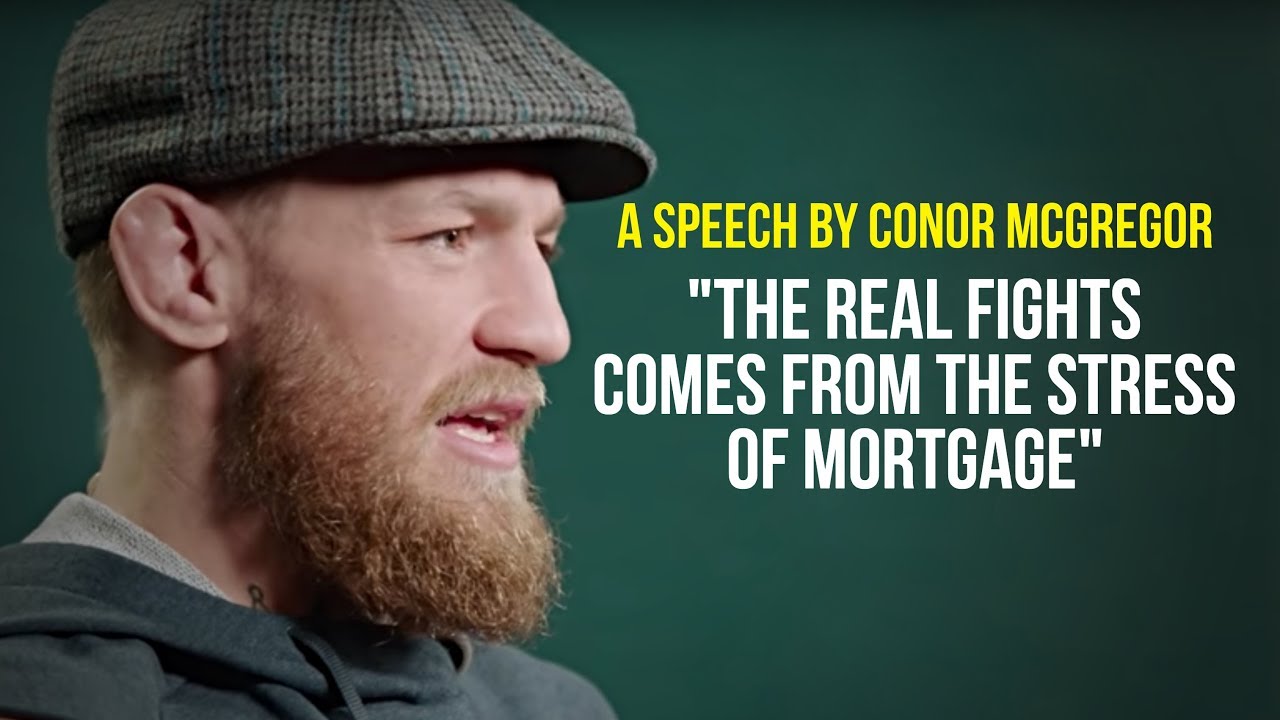
Conor McGregor’s real fight, he says, was never the one under the lights — it was the mortgage.
A new compilation from the motivational channel Video Advice, titled “Conor McGregor | 5 Minutes For The NEXT 50 Years of Your LIFE,” strips away the walkouts and trash talk and focuses on something McGregor rarely gets credit for: the mindset behind the persona. Built from candid interview audio layered over training footage and career highlights, the video treats the former two-division UFC champion less as a fighter and more as a case study in obsession, risk, and financial survival.
- The video’s central line — “the real fights come from the stress of mortgage” — frames McGregor’s Octagon career as a controlled, time-limited version of the financial anxiety his working-class Dublin family lived with growing up.
- McGregor traces his path from apprentice plumber to global sports icon, crediting self-belief, visualization, and total immersion in training over raw natural talent.
- The video’s title argues that how a person uses “the next 5 minutes” can determine the next 50 years, built around footage of McGregor’s own training regimens and title runs.
The Mortgage Line
McGregor’s comparison is deliberately unglamorous. Fighting for a UFC title lasts, at most, 25 minutes across five rounds, and it ends — win, lose, or draw. A mortgage doesn’t end. It sits on a family for decades, generating a low, constant pressure that McGregor says is more corrosive than anything he faced across the cage. He grew up in Dublin in a household that felt that pressure directly, and he has said the goal was never just winning belts — it was making that specific kind of stress disappear permanently for the people around him.
“The real fights come from the stress of mortgage.”
That framing explains why McGregor talks about fighting in almost businesslike terms. Every camp, every opponent, every pay-per-view is treated as a mechanism for closing the gap between his family’s financial exposure and permanent security — not as an end in itself.
From Apprentice Plumber to Featherweight and Lightweight Champion
Before the UFC contracts and pay-per-view paydays, McGregor was training as a plumber in Dublin, drawing social welfare while grinding through amateur and early professional fights. The video leans on that gap — a teenager collecting a welfare check one year, a two-division UFC champion a few years later — as the proof point for his argument that talent alone doesn’t explain outcomes like his. He holds up his own visualization habits and near-total obsession with training as the actual mechanism, not some inherited gift.
This is consistent with how McGregor has described his rise elsewhere: less a talent story, more a story about compounding small decisions — showing up to a gym session, cutting a corner out of his life, choosing discipline over comfort — over and over until the compounding became a UFC featherweight belt, then a lightweight belt, then a superfight paycheck.
Five Minutes, Fifty Years
The video’s title is its own thesis. McGregor’s argument is that the decisions made in a short, specific window — how hard someone trains today, whether they take the uncomfortable opportunity in front of them right now — compound over decades. He isn’t talking about a single fight-night adjustment; he’s talking about the accumulated effect of thousands of five-minute decisions made the same way, over and over, for years.
It’s a framework that echoes other entries in the same Video Advice series, including Matthew McConaughey’s own “5 Minutes for the NEXT 50 Years of Your LIFE” segment, which builds toward a similar point about compounding daily choices rather than one-time breakthroughs. McGregor’s version is grittier — rooted in plumbing apprenticeships and welfare checks rather than acting-career reinvention — but the underlying mechanic is identical: small, repeated decisions, sustained long enough, rewrite a life.
Self-Belief as a Working Tool
McGregor doesn’t present self-belief as a feel-good abstraction. In the video, he treats it as a practical tool he used deliberately — visualizing fights and outcomes before they happened, then training as if the outcome were already decided. He credits that habit, paired with a willingness to take risks other fighters wouldn’t, as the actual engine behind his run through the featherweight and lightweight divisions.
He also frames risk-taking as non-negotiable for anyone chasing a result bigger than their current circumstances. Staying safe, in his telling, guarantees staying where you are — the same logic that shows up in other creator-economy content aimed at people trying to break out of financial stagnation, where the advice consistently comes back to taking the uncomfortable action rather than waiting for the safe one.
The video doesn’t pretend McGregor’s road was smooth. It leans into the obstacles — training-camp setbacks, financial precarity before the big contracts, the grind of amateur fights for little money — and frames his response to those obstacles, not the obstacles themselves, as the actual lesson. Persevere, adapt, and keep working the plan regardless of what the current round of adversity looks like.
What the compilation ultimately sells isn’t a highlight reel — it’s the mortgage line, repeated as the emotional core of everything McGregor did on the way from a Dublin plumbing apprenticeship to two UFC belts. Whatever comes next in his career, that’s the sentence Video Advice is betting people remember.








Design Your Dream Life Through Passive Income | Alex Szepietowski | TEDxUniversityofYork
Hybrid business models
Warren Buffett – The World’s Greatest Money Maker
How to Find and Buy a Foreclosed Home
The Uniqueness of a Hybrid Business Model