

 InfoSearched
Jimmy Ton wants to prove that hitting 9,000 subscribers on YouTube doesn’t come close to quitting your day job.
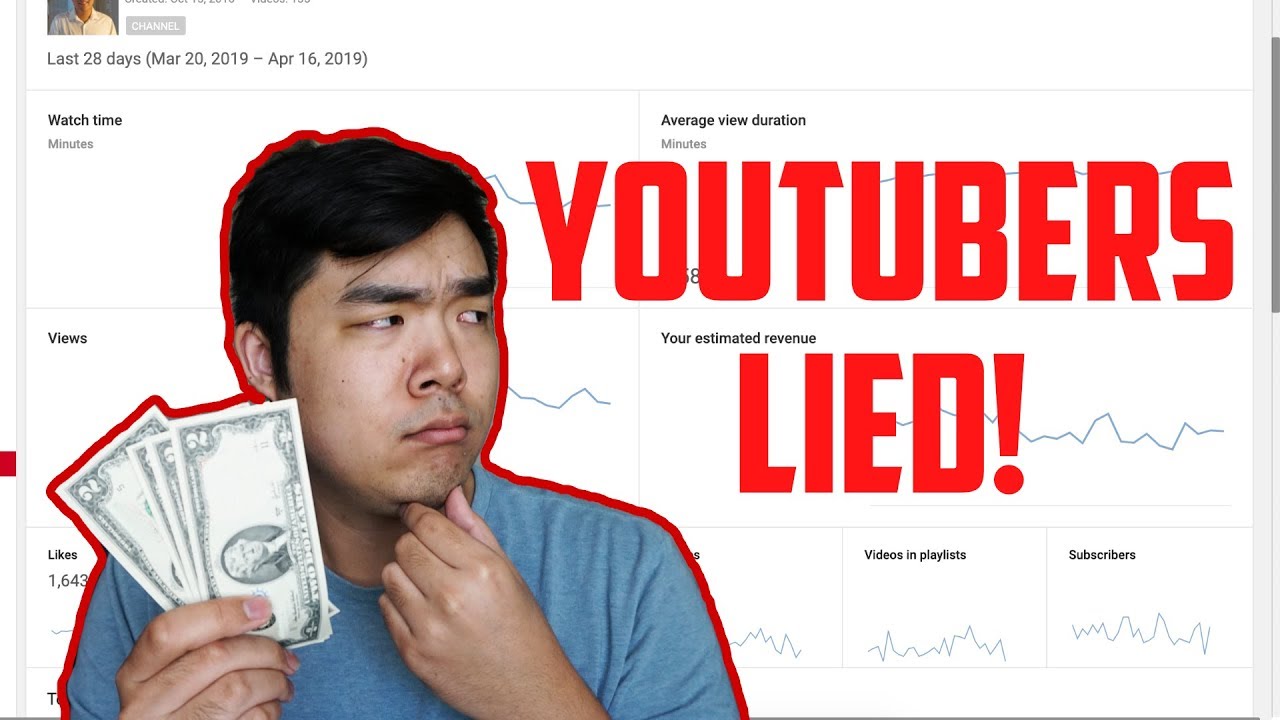
In his April 19, 2019 video “How Much Money Does My Small 9,000 Subscriber YouTube Channel Make?”, Houston-based creator Jimmy Ton pulls up his own AdSense dashboard and walks through exactly what a micro-tier tech channel actually earns. Ton runs Jimmy Tries World, a consumer tech and lifestyle channel he started in 2016 during his senior year at the University of Houston, and he built this video specifically to push back on other creators who flash a screenshot of “$300 this month” without any context. His goal is simple: show the real math behind monetized views, CPM, and the taxes nobody mentions on camera.
- Ton’s true lifetime CPM sits at $1.45 per 1,000 monetized views, but that number jumped to $2.30 per 1,000 views for the month he recorded the video — proof that CPM swings constantly rather than sitting at a fixed rate.
- Subscriber count has no direct bearing on payouts; Ton explains that revenue is driven by monetized playbacks and ad impressions, with subscribers only mattering because they tend to generate an early viewership spike on new uploads.
- Self-employment tax takes 15.3% of a creator’s YouTube income at the end of the year, since AdSense doesn’t withhold anything the way a W-2 paycheck from a job like McDonald’s or Walmart would.
Debunking the Fixed-Rate Myth
Ton opens by calling out a common creator move: stretching a video past the 10-minute mark for the sole purpose of qualifying for mid-roll ad breaks, then flashing a dashboard total as if that figure tells the whole story. He argues there’s no universal dollar-per-view or dollar-per-subscriber formula, because CPM — the average revenue per 1,000 monetized views — differs by country, niche, and even ad-blocker usage among viewers. As a tech reviewer, Ton suspects his audience skews toward heavier ad-block adoption, which he says drags his own numbers down compared to lifestyle or beauty channels with similar subscriber counts.
My real CPM would be $1.45 every 1,000 views. This fluctuates.
The Real CPM Math
To get an honest number, Ton divides his channel’s total lifetime revenue by total views in thousands rather than trusting any single month’s snapshot. That calculation lands him at $1.45 per 1,000 views over the channel’s history, compared with the $2.30 per 1,000 he was pulling that particular month. He compares his figures against other creators who’ve publicly shared analytics and finds CPMs ranging as high as $10 per thousand views down to close to $1 — a spread he says makes any blanket “here’s what YouTube pays” claim misleading on its face.
Affiliate Links, Sponsorships, and the Holiday Bump
Beyond straight AdSense revenue, Ton breaks down the Amazon affiliate links he leaves in his video descriptions, noting that this income is only a fraction of what ad revenue brings in — except during the holiday season, when it spikes noticeably. Because Amazon only lets creators view affiliate earnings in yearly increments or smaller, Ton shares his total from 2018 rather than a monthly figure. He also touches on preroll ads, outro spots, and sponsorships from companies like VPN services, Honey, and Squarespace, though he’s careful to note his own experience has mostly been limited to receiving free products rather than paid placements, so he can’t speak to what those deals typically pay.
The Tax Bill and Costs Nobody Mentions
Ton’s sharpest point lands on taxes. Unlike a paycheck from a traditional employer where withholding happens automatically, YouTube income arrives untaxed, meaning creators owe 15.3% in self-employment tax at year’s end in the U.S. On top of that, running a channel requires spending your own money to make content in the first place — new games for a gaming channel, new products for a beauty channel, and for Ton, the tech gadgets he reviews. None of that is free, and it’s rarely factored into the “look how much I made this month” screenshots that circulate online.
Ton’s whole point boils down to this: a 9,000-subscriber tech channel pulling in a couple thousand dollars a month before ads, affiliate cuts, and gear costs still hands 15.3% of whatever’s left straight to the IRS come tax season — which is exactly the line that never makes it into anyone else’s screenshot.







How To Build Strategic Partnerships and Grow Your Business: for Entrepreneurs and Freelancers
How to Get Insider Trading Info for Free
How To Work Less & Be More Productive – Tim Ferriss
Inventory Systems and Inventory Costing Methods | Principles of Accounting
Introduction To Online Business 1-2-3