

 InfoSearched
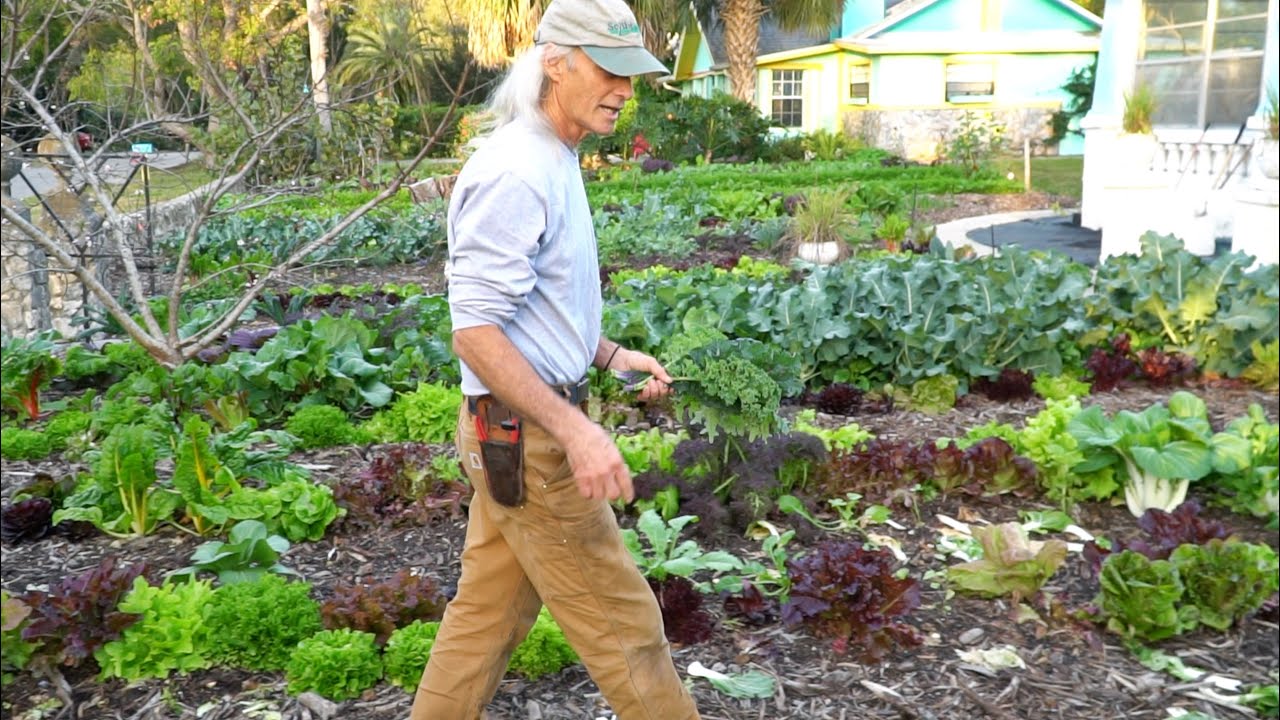
A suburban front yard in New Port Richey, Florida, is quietly out-producing what most people assume a quarter-acre lot can do.
Jim Kovaleski doesn’t own a tractor, doesn’t till the soil, and doesn’t burn a drop of gas moving his harvest to market. Yet his operation, Freedom House Farm, pulls in roughly $1,000 a week growing vegetables on his mother’s residential lot and an adjoining property. Pete Kanaris’s GreenDreamsTV profile lays out exactly how a nomadic grower with zero acreage and almost no capital turned two front yards into a functioning small farm business.
- Kovaleski grosses around $1,000 a week — roughly $4,000 to $5,600 a month — selling produce grown on residential front-yard plots in New Port Richey, Florida.
- He splits his year between Freedom House Farm in Florida during fall and winter and a separate farming operation in Maine over the summer.
- He delivers everything by bicycle and trailer to about 50 local families, plus Tasty Tuesdays at the New Port Richey Public Library, Wright’s Natural Market, CSA shares, and local restaurants.
A Farm That Migrates With the Seasons
Kovaleski’s calendar doesn’t look like a typical grower’s. He works Freedom House Farm through the cool months in Florida, then heads north to farm in Maine for the summer, leaving the New Port Richey beds behind entirely. Rather than fallow ground going to weeds, he lets wild sweet potato vines take over the plots while he’s away — a cover crop that does its job with no irrigation, no attention, and no cost.
When he returns each autumn, those vines get harvested for their tubers before he rebuilds the beds. It’s a full-circle system: the same crop that occupied the space all summer also feeds his family and customers once it’s dug up.
The ‘Grass-Fed’ Method
Kovaleski calls his approach “grass-fed” market gardening, and the name is literal. He mows grass with a scythe and uses the clippings as mulch, layers on compost, and tops beds with wood mulch he gets free from the municipality rather than buying inputs. There’s no tiller running through the soil and no synthetic fertilizer or pesticide going into it — everything is done by hand tool.
That no-till, no-machine discipline is also what keeps his overhead close to nothing. No diesel, no equipment payments, no repair bills — just labor, mulch, and patience rebuilding the same small beds year after year.
Two residential front yards, roughly 70 crop varieties, and a bicycle trailer are enough to gross $1,000 a week without a single gallon of gas.
Seventy Varieties on a Front Lawn
Once the beds are rebuilt each fall, Kovaleski plants around 70 varieties of cool-season organic crops — root vegetables, brassicas, and salad greens — packed into a footprint most homeowners would use for a lawn. That density is the whole economic engine: small-scale market gardening only pencils out at $1,000 a week if the grower is running dozens of crops through tight, intensively managed beds rather than a handful of row crops spread thin.
Bicycle Delivery as the Business Model
Freedom House Farm doesn’t own a delivery van. Kovaleski packs harvested produce and hauls it by bicycle and trailer directly to the people buying it — regular CSA members, a handful of restaurants, and shoppers at Tasty Tuesdays, the weekly farmers market at the New Port Richey Public Library. He also supplies Wright’s Natural Market, a downtown natural foods grocer, giving the farm a retail outlet beyond direct sales.
It’s a model built entirely around proximity: the farm, the market, the grocer, and the customers’ homes are all close enough that pedal power covers it. That keeps roughly 50 local families fed on produce that never touched a delivery truck.
Kovaleski’s whole setup — no land purchase, no loans, no gas bill — is the kind of low-capital business structure that shows up across a lot of small, independent ventures, not just farms; the same logic anyone starting a home-based operation should study before assuming they need real estate and equipment to get going, the way it’s broken down in 3 Steps To Starting A Home Business…. And the fact that he splits his year between Florida and Maine, running the business remotely in between, puts him in the same category as the location-independent workers profiled in Working online and traveling the world – digital nomads | DW Documentary — just doing it with vegetables instead of a laptop. Come summer, the New Port Richey beds go quiet again, the sweet potato vines take back over, and Kovaleski is off to Maine until it’s time to mulch, plant, and start pedaling deliveries all over again in the fall.








From $0 to $600K per month Selling Tea at 22 Years Old | Gretta Van Riel
How a Sole Proprietorship Works | Introduction to Legal Structures
5 eBay Selling Tips for Newbies
Should you be a Sole Proprietor or LLC? The Pros and Cons you Need to Know
Multi-Billionaire Explains his Simple Steps to Success