

 InfoSearched
Jaspreet Singh says the biggest excuse for not starting a business — “I don’t have the money” — doesn’t hold up anymore.
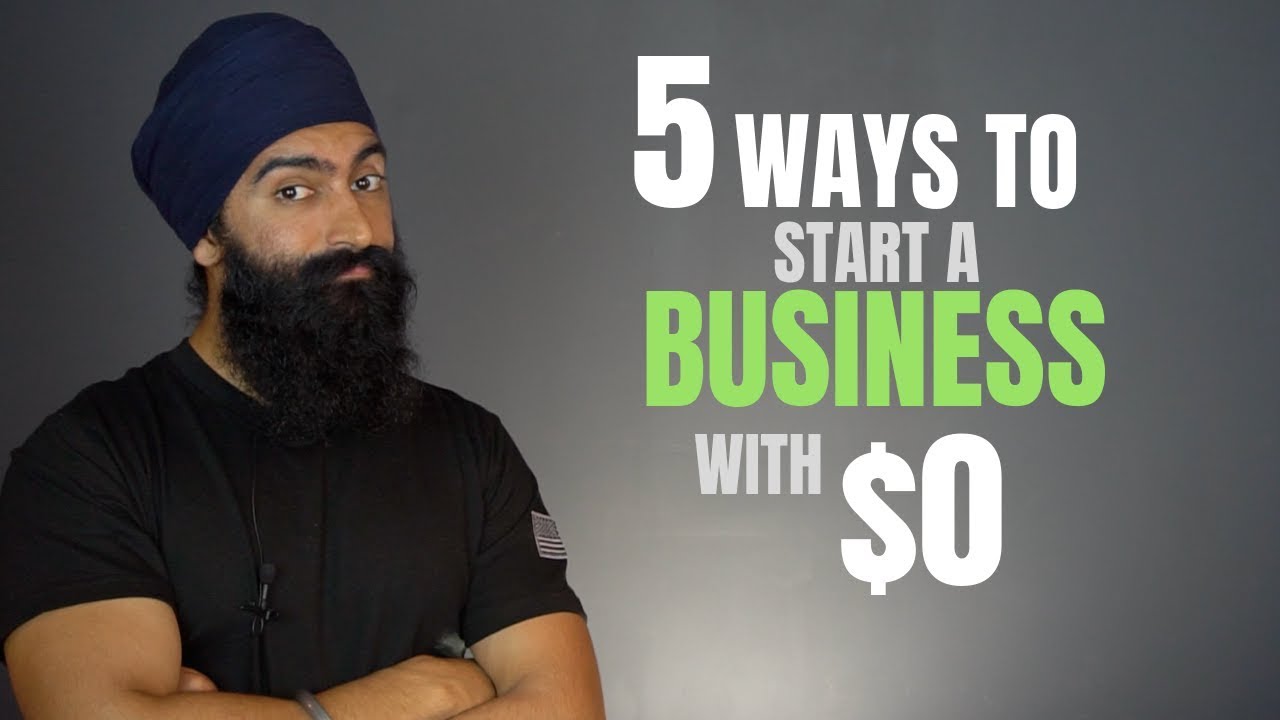
In his video “5 Business Ideas You Can Start With NO MONEY,” attorney-turned-entrepreneur Jaspreet Singh lays out five ways to launch a business using nothing but time, skill, and a laptop. Singh, who built the financial education brand Minority Mindset after early ventures in college left him dealing with scams and a lack of practical money knowledge, frames the video around a simple premise: sweat equity beats outside financing when you’re starting from zero. Each idea he covers runs through free-to-use platforms, with no upfront spend on inventory, office space, or equipment.
- Singh identifies freelancing and virtual assistance as the most accessible zero-cost starting points, both operable through platforms like Upwork, Fiverr, and Freelancer.
- He also breaks down dropshipping, digital products, and affiliate marketing as models that avoid upfront inventory purchases entirely.
- Singh’s core strategy: generate early revenue from low-overhead offerings, then reinvest that income into scaling the business.
Singh Questions Capital Requirements Myth
Singh’s own entrepreneurial history informs the pitch. His college ventures ranged from event promotion to inventing a product, and both experiences exposed him to scams and gaps in his financial education — the exact frustration that pushed him to launch Minority Mindset in the first place. The mission he built around it is to get people to, in his words, “think differently than the majority,” and this video is built around proving that a lack of capital isn’t the same as a lack of options.
That’s the thread running through all five ideas: none of them require a loan, a business partner, or a line of credit. They require a marketable skill — writing, administrative support, digital marketing, or design — and a willingness to turn that skill into a service someone will pay for immediately.
Freelancing and Virtual Assistance: The Fastest Entry Points
Freelancing tops Singh’s list because it converts an existing skill directly into income with no setup cost. If you can write, design, code, or manage social media, platforms like Upwork, Freelancer, and Fiverr let you list services and start taking clients the same day. For a deeper rundown of where those gigs live, the Top 5 Freelance Sites breaks down the platforms worth prioritizing.
Virtual assisting works differently, Singh notes — instead of one-off freelance jobs, a VA operates as an ongoing personal assistant to a business owner, handling email management, scheduling, data entry, and social media upkeep. Rather than relying solely on freelance marketplaces, VAs can build a client base through LinkedIn, Facebook, or a simple personal website.
Start small, be patient, and grow your business as revenues start coming in.
Dropshipping Without Buying Inventory
Singh’s third idea, dropshipping, removes the biggest traditional startup cost: buying and storing product. A store owner partners with a supplier, and when a customer orders, the supplier ships directly to them — no warehouse, no unsold stock sitting in a garage. Singh points to Shopify, WooCommerce, and Amazon as the platforms to build that storefront on. For a real example of how far that model can scale, the story behind How I Turned $400 to $1.3 Million | Dropshipping Success Story 2019 shows the same zero-inventory approach taken to seven figures.
Digital Products and Affiliate Commissions
Singh’s fourth idea, digital products — e-books, online courses, audio and visual content — asks for an upfront investment of time rather than cash. Build it once on Amazon Kindle, Gumroad, or Teachable, and it can generate sales repeatedly without additional production cost, which is where the passive-income appeal comes from.
The fifth idea, affiliate marketing, cuts out product creation entirely: join an affiliate network, get a unique link, and earn a commission whenever someone buys through it. Singh frames it as one of the lowest-friction options on the list since it requires no product, no inventory, and no client management — just an audience and a platform to promote on. Anyone wanting the mechanics of picking a network and building that promotional strategy can find a fuller walkthrough in Launching into Affiliate Marketing: A Guide.
Singh’s closing point in the video isn’t about which of the five ideas is best — it’s that all five share the same starting requirement: none of them. Pick the one that matches a skill you already have, list it on a free platform this week, and let the first few clients fund whatever comes next.




Make Hybrid Cloud Work for Your Business
How much I pay in taxes on a $163,800 per month income
Conor Mcgregor | 5 Minutes For The NEXT 50 Years of Your LIFE
EXACTLY how I do market research for new products
Mark Cuban – The #1 Reason Why Most People Fail In Business