

 InfoSearched
For many entrepreneurs testing an idea before committing real money, the simplest legal structure can also be the smartest one.
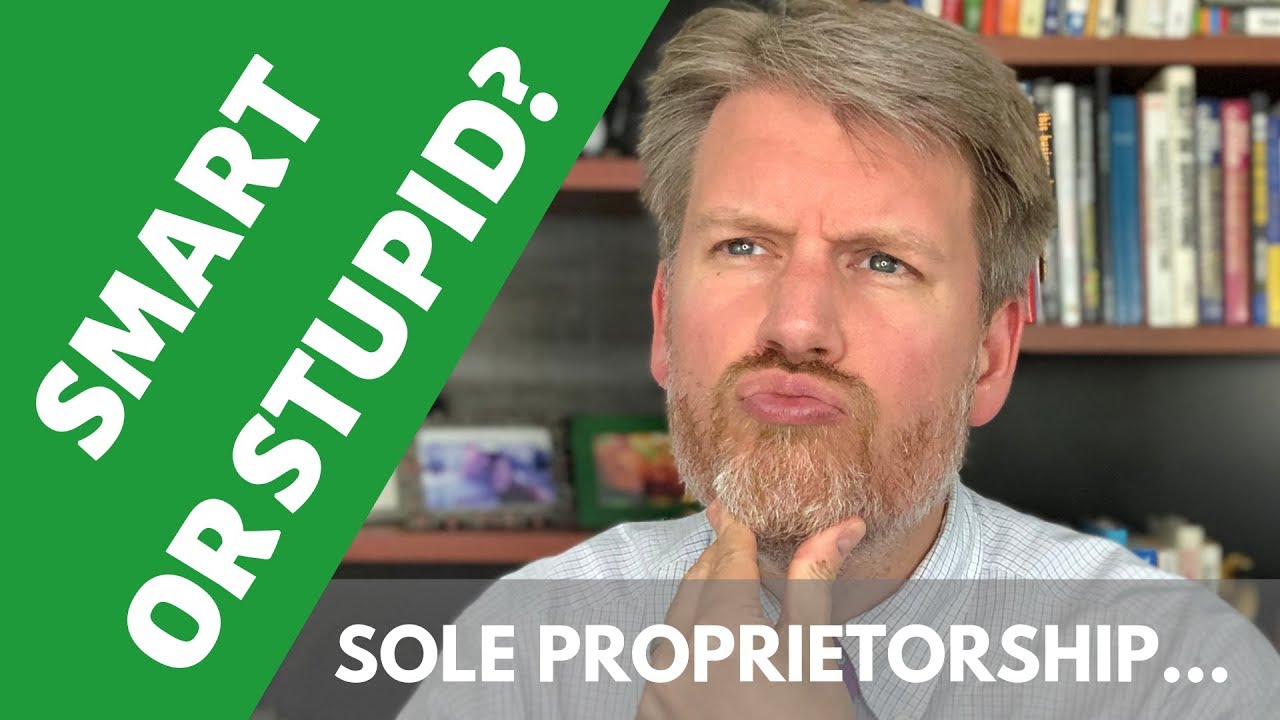
Attorney Jim Hart makes the case for sole proprietorships in his guidance video “Why a Sole Proprietorship Might be a Shrewd Business Move,” pushing back against the reflexive advice that every new business owner should form an LLC on day one. Hart, who works with online entrepreneurs and content creators, lays out when skipping formal entity registration is actually the more rational move rather than a rookie mistake. His argument centers on cost, speed, and the reality that most side hustles and early-stage online ventures don’t carry the kind of liability exposure that justifies the paperwork.
- A sole proprietorship requires no separate registration, meaning the owner and the business are legally identical from the start.
- Business income and losses flow directly onto the owner’s personal tax return, typically via Schedule C, avoiding corporate filing fees and state franchise taxes.
- The tradeoff is unlimited personal liability — personal savings and property are exposed to business debts, creditor claims, and lawsuits since no separate legal entity exists.
Hart Advises Delaying LLC Formation
Most legal advice defaults to forming an LLC or corporation before a business ever takes its first dollar, and Hart doesn’t dispute that this is often the safer long-term move. But he argues that for a new online seller, freelancer, or creator still validating whether an idea has legs, a sole proprietorship lets them start operating immediately without state filing fees, registered-agent costs, or annual compliance filings eating into a business that hasn’t proven itself yet. There’s no entity to form, no operating agreement to draft, and no separate EIN required unless the owner wants one.
That simplicity is the entire pitch. Hart frames the sole proprietorship as the default structure a business falls into the moment someone starts selling something under their own name — no action required. It’s the absence of paperwork, not a feature added on top, that makes it attractive during the exploratory phase.
The Tax Mechanics
Under a sole proprietorship, there’s no corporate-level tax return. Profits and losses pass straight through to the owner’s personal 1040 via Schedule C, which means no franchise tax, no separate business filing deadline, and no additional accounting layer during a period when a founder may still be figuring out if the venture is viable at all. Hart points to this as one of the clearest cost advantages over an LLC, particularly for a business generating modest revenue where compliance overhead could eat a disproportionate share of profit.
The Liability Tradeoff
The catch is the one every attorney flags: without a separate legal entity, there is no shield between the business and the owner’s personal assets. A lawsuit, an unpaid vendor bill, or a business debt can reach a sole proprietor’s savings, home equity, or personal property directly. Hart doesn’t minimize this — it’s the core reason LLCs exist in the first place, and for any founder bringing on employees, signing contracts with third parties, or operating in a higher-risk category, that exposure becomes harder to justify.
For a low-risk online business still proving its concept, the sole proprietorship isn’t a shortcut around liability — it’s a bet that the liability risk simply isn’t there yet.
That’s the calculation Hart wants founders to actually run, rather than assuming the more expensive structure is automatically the responsible one. Business owners weighing the alternative can compare the tradeoffs directly in LLC vs Sole Proprietor: Which is best for YOUR business?.
Timing for Business Entity Conversion
Hart’s guidance isn’t an argument against ever forming an LLC — it’s an argument about timing. Once a business starts generating meaningful revenue, taking on partners, hiring staff, or entering contracts where a lawsuit could realistically wipe out personal savings, the calculus flips and the liability shield becomes worth the filing fees and annual compliance work. Founders who reach that point later can walk through the actual mechanics in How to Convert a Sole Proprietorship to an LLC.
The point Hart keeps returning to is that the sole proprietorship is meant to be a starting position, not a permanent one. Test the idea, keep overhead near zero, and convert once there’s actually something worth protecting.




3 Questions You Should Never Ask in Marketing Research
Blockchain Full Course – 4 Hours
Mike Tyson’s Top 10 Rules For Success (@MikeTyson)
Blockchain Technology Explained (2 Hour Course)
How much I pay in taxes on a $163,800 per month income