

 InfoSearched
The story of how a Nebraska paperboy built the most studied investment record in modern finance still runs through Omaha.
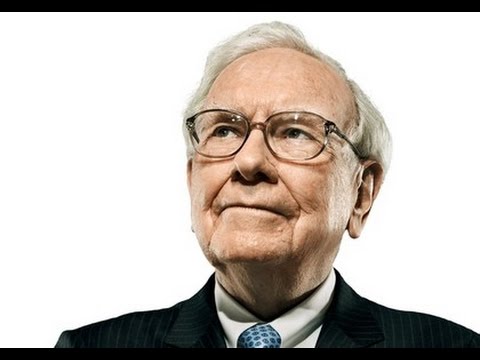
Warren Buffett has spent more than six decades turning Berkshire Hathaway from a dying New England textile mill into a global holding company, and a new retrospective from financial channel FINAiUS traces that arc from his first stock purchase as a boy to his current status as one of the richest men alive. The documentary leans on the mechanics — the insurance float, the acquisitions, the crisis calls — rather than the mythology. It’s a useful corrective, because Buffett’s actual playbook is far more specific than the “buy good companies” shorthand usually attached to his name.
- Buffett took control of Berkshire Hathaway in 1965 and converted the failing textile manufacturer into the vehicle for his acquisitions and investment portfolio.
- He financed major purchases — including See’s Candies in 1972 and a heavy post-crash accumulation of Coca-Cola stock in 1987 — using the “float” generated by insurance subsidiaries such as GEICO and Blue Chip Stamps.
- In 2006 he pledged to give away more than 99% of his personal fortune, primarily through the Bill & Melinda Gates Foundation, and co-founded the Giving Pledge in 2010.
From Cigar Butts to Compounding Machines
Buffett’s investing education started at Columbia Business School under Benjamin Graham, who taught him to hunt for “cigar butt” stocks — companies so cheap relative to their intrinsic value that there was still one good puff left in them, even if the business itself was mediocre. That approach worked, but it had a ceiling. It was Charlie Munger who pushed Buffett toward a different framework: paying a fair price for a wonderful business with a durable competitive moat is better than paying a bargain price for a mediocre one, because the wonderful business keeps compounding long after the cigar butt is finished.
That shift shows up directly in the See’s Candies deal in 1972, a business with modest hard assets but a pricing power and brand loyalty that Graham’s balance-sheet math would have undervalued. It’s the same logic behind loading up on Coca-Cola shares after the 1987 crash — a globally dominant consumer brand trading at a discount because the market panicked, not because the business had changed. Readers who want the mechanical version of this idea — margin of safety, intrinsic value, moat analysis — will find it echoed in more tactical form in pieces like 3 Ways to REALLY Make Money in The Stock Market (Insider Tips).
The Insurance Engine Behind Berkshire
The less glamorous part of Buffett’s history is the plumbing: insurance float. When a policyholder pays a premium, Berkshire holds that cash until a claim comes due, and Buffett used the float from GEICO and Blue Chip Stamps as a permanent, low-cost pool of investment capital. That structure is what let Berkshire fund acquisition after acquisition without constantly raising outside money, and it’s the financial engine that turned a textile company into a conglomerate spanning insurance, railroads, utilities, and consumer brands.
Crisis Management as a Recurring Theme
Buffett’s reputation isn’t built only on picking stocks — it includes stepping into other people’s disasters. He took the reins at Salomon Brothers from 1989 to 1991 during its Treasury-trading scandal, lending his credibility to a firm that badly needed it to survive regulatory scrutiny. Nearly two decades later, during the 2008 financial crisis, he deployed capital into Goldman Sachs on terms favorable enough to Berkshire that the move became a case study in opportunistic investing during panic.
Pay a fair price for a wonderful business, not a bargain price for a mediocre one — that’s the Munger-influenced pivot that separates the modern Berkshire from Graham’s original playbook.
A Fortune He Never Spent on Himself
What the documentary underscores repeatedly is how little Buffett’s own lifestyle changed as his net worth climbed past $100 billion. He still lives in the Omaha house he bought in 1958 for $31,500. In 2006 he committed to giving away more than 99% of his personal fortune, funneling the bulk of it through the Bill & Melinda Gates Foundation, and in 2010 he co-founded the Giving Pledge to recruit other billionaires into the same commitment. For anyone tracking how wealth actually gets built and then redistributed at that scale, it’s worth pairing this history with Multi-Billionaire Explains his Simple Steps to Success for a look at how other self-made investors describe the same discipline.
Berkshire’s annual shareholder letter and the Omaha meeting remain the closest thing the investing world has to an annual state-of-the-union, and Buffett — into his late 80s by the time this retrospective aired — was still writing both himself, still explaining the same moat-and-float logic he’d been running since See’s Candies in 1972.




3 POWERFUL Ways To Profit From Your BLOG… Starting TODAY!
3 Ways to REALLY Make Money in The Stock Market (Insider Tips)*
Inventory Systems and Inventory Costing Methods | Principles of Accounting
How To Work Less & Be More Productive – Tim Ferriss
George Gilder: Forget Cloud Computing, Blockchain is the Future