

 InfoSearched
Every founder eventually faces the same fork in the road: build it alone, or bring someone else in to share the load.
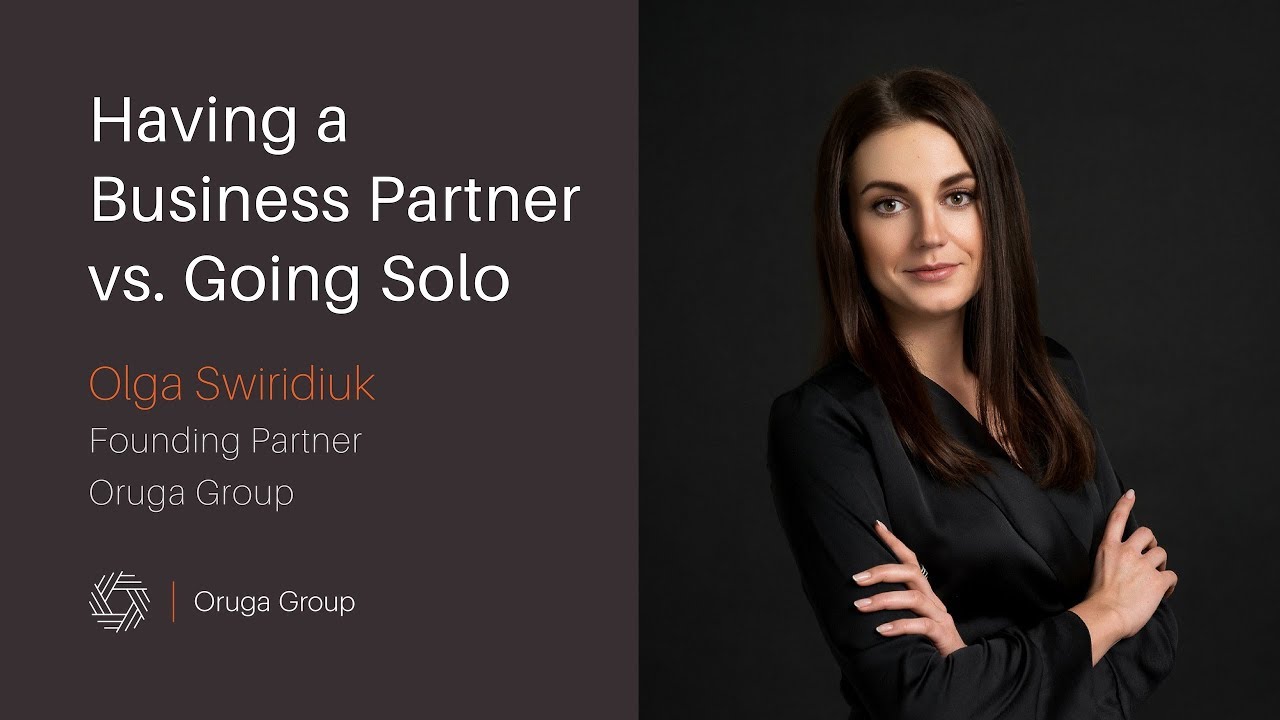
Oruga Group’s advisory video “Having a Business Partner vs Going Solo” breaks down that decision the way a corporate lawyer would, not a motivational speaker. The firm, which works in corporate law, FDI and PPP structuring, mergers and acquisitions, and international business registration, frames the choice as a legal and financial risk calculation rather than a personality test. The result is a practical guide for early-stage founders trying to weigh independent control against shared capacity.
- Solo founders keep 100% of profits and make decisions without consultation, but they carry exclusive personal liability and total financial exposure for the business.
- Partnerships pool capital, split operational responsibilities, and combine complementary skill sets, but require mandatory profit-splitting and shared legal liability.
- Oruga Group’s advisors stress that a written partnership agreement — covering equity stakes, profit-and-loss splits, asset contributions, management duties, dispute resolution, and exit terms — must be executed before operations begin.
The Case for Going Solo
Running a sole proprietorship means no committee meetings before a decision gets made. A solo founder sets the price, picks the vendor, and pivots the strategy in real time, with no internal friction to slow things down. That speed, plus keeping every dollar of profit instead of splitting it, is the core appeal Oruga Group highlights.
The trade-off is structural, not just personal preference. A sole proprietor absorbs exclusive personal liability and complete financial exposure — there’s no partner to share a lawsuit, a bad debt, or a failed product launch. Oruga Group’s advisors point to a specific operational hazard here too: one person overseeing every division of the business — sales, finance, operations, marketing — routinely leads to decision fatigue and severe burnout, which can erode the very control that made going solo attractive in the first place.
The True Value of Partnerships
A formal partnership brings pooled capital and shared operational responsibility, letting founders divide the workload according to who’s actually good at what. Complementary skill sets and collaborative decision-making, according to the advisory, can accelerate how fast a business scales — one partner runs operations while another handles growth, rather than one person trying to do both badly.
The risks are just as concrete. Partners share legal and financial liability, meaning one partner’s bad decision can expose the other. Profit-splitting is mandatory, not optional, and interpersonal deadlock — two founders who simply can’t agree on direction — can stall a business as effectively as running out of cash.
Mitigating partnership risk requires an exhaustive partnership agreement executed in writing before operations even begin.
The Legal Guardrails That Matter
Oruga Group’s legal advisors don’t treat the partnership agreement as boilerplate — they list it as the single mechanism that determines whether shared ownership works or blows up. The agreement needs to explicitly define equity stakes, profit-and-loss distribution, and each partner’s asset contributions before the business opens its doors.
Beyond ownership math, the agreement has to spell out daily management responsibilities so nobody assumes someone else is handling payroll or compliance. Just as critical are the dispute-resolution procedures and the exit or dissolution strategy — the terms nobody wants to negotiate mid-argument, which is exactly why Oruga Group insists they get settled on paper first. Founders weighing this exact fork can find more structural detail in LLC vs Sole Proprietor: Which is best for YOUR business?, and in the practical mechanics covered in How to Convert a Sole Proprietorship to an LLC.
Matching the Structure to the Founder
Nothing in Oruga Group’s breakdown suggests one structure beats the other universally — the advisory frames it as risk allocation matched to the individual founder’s capacity and the business’s actual needs. A founder with deep expertise in one area but gaps elsewhere is the clearest candidate for a partner who fills those gaps; a founder who wants to avoid profit-splitting and internal conflict at any cost leans solo and accepts the liability that comes with it.
That framing lines up with the lived experience covered in Why I Don’t Have A Business Partner Anymore, where the interpersonal deadlock Oruga Group warns about plays out in practice rather than theory.
The one piece of advice that runs through the entire video is procedural, not philosophical: whichever structure a founder picks, the paperwork — the equity split, the exit clause, the dispute mechanism — has to exist before the first invoice goes out, not after the first disagreement.




This is Why All Billionaires Wake Up EXACTLY at 4:00 AM…
George Gilder: Forget Cloud Computing, Blockchain is the Future
Single Member LLC Mistakes You Should Avoid – 4 Biggies
Mike Tyson’s Top 10 Rules For Success (@MikeTyson)
Launching into Affiliate Marketing: A Guide