

 InfoSearched
Poverty, according to David Bayer, isn’t a bank balance — it’s a program running in your head that you never agreed to install.
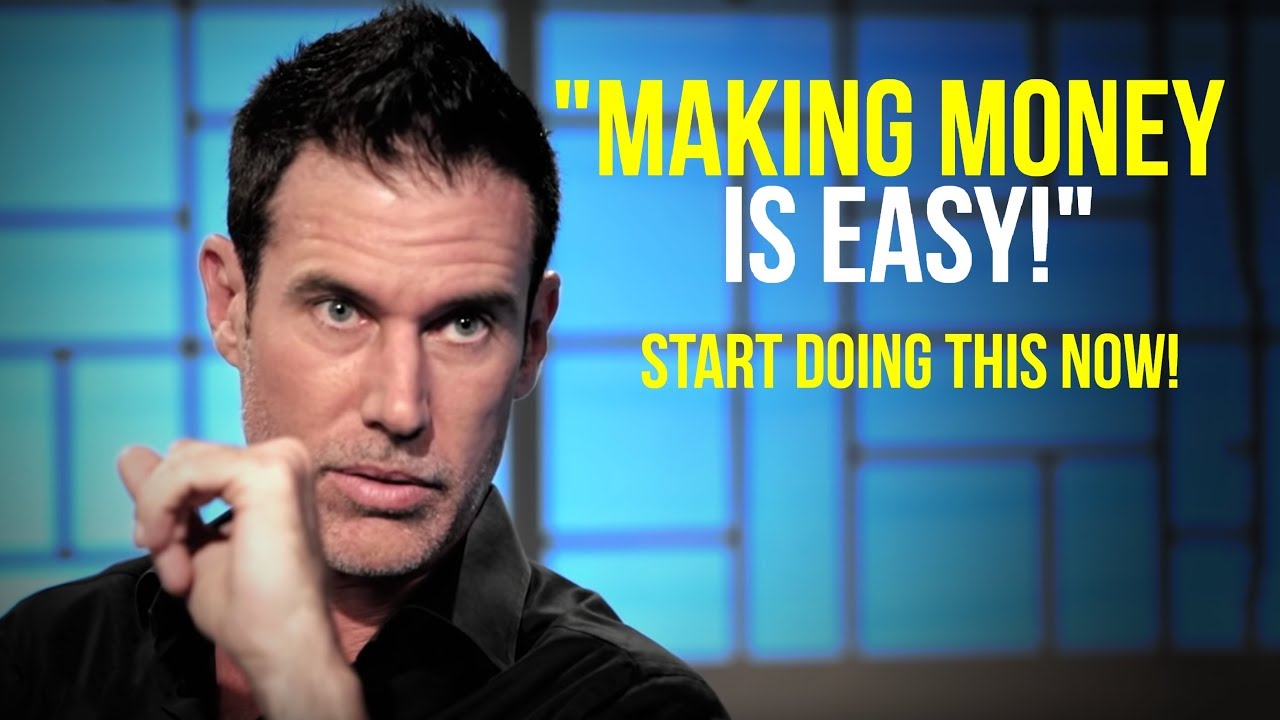
The video “If You Want To Escape Poverty, DO THIS NOW!,” curated by the channel Be Inspired, features mindset coach and author David Bayer breaking down why financial struggle tends to outlast the circumstances that caused it. Bayer, an American personal development coach and author of “Mind Hack,” argues that scarcity is sustained less by external resources and more by subconscious conditioning laid down in childhood. He speaks from experience: before building a multi-million-dollar coaching business, he faced two separate home foreclosures.
- Bayer says childhood programming dictates beliefs, which generate thoughts, drive emotions, dictate actions, and ultimately manifest tangible financial reality.
- He describes people operating on an outdated “mental operating system” in which fear and suffering consume hours of daily mental energy.
- Bayer’s own turning point came after facing dual home foreclosures, a low point he cites as the starting place for the mindset shift that led to his current multi-million-dollar enterprise.
The Belief-to-Reality Pipeline
Bayer’s central argument, drawn from neuroscience and cognitive psychology, is that beliefs aren’t neutral background noise — they’re the first domino. A belief generates a thought, the thought generates an emotion, the emotion drives an action, and the action produces the result someone eventually points to as “reality.” Run that sequence off a scarcity belief installed at age seven, he says, and you’ll keep producing scarcity results at thirty-seven, regardless of opportunity or effort.
That’s the mechanism he wants viewers to see clearly: the outcome isn’t the problem, it’s the output of an upstream belief nobody ever audited. Bayer, who now runs David Bayer Transformational Programs and headlines the annual Powerful Living Experience seminar, frames this as diagnostic work before it’s motivational work — find the faulty belief before trying to force a different result.
An Outdated Operating System
Bayer’s phrase for this is a “mental operating system” — inherited, mostly unconscious, and rarely updated past childhood. He says fear and suffering, left unexamined, eat up enormous stretches of a person’s day, hours that could otherwise go toward the actions that actually change a financial trajectory.
The fix he proposes isn’t years of therapy or a new budgeting app — it’s recognition. Bayer instructs viewers that the fastest way to eradicate a limiting belief is to consciously identify it as untrue the moment it surfaces, rather than letting it run silently in the background dictating decisions.
Unlearning the unintelligent subconscious pattern and making one decision to operate from a powerful state of mind is what changes a person’s financial trajectory.
From Foreclosure to a Multi-Million-Dollar Business
Bayer doesn’t present this as theory. He points directly to his own history — two home foreclosures — as the low point that forced him to confront the beliefs running his financial life. The rebuild that followed became the foundation for David Bayer Transformational Programs, the company he now runs as CEO, and for the Powerful Living Experience, the seminar he hosts annually built around this exact framework.
That personal arc is why the presentation lands as more than a pep talk: it’s a coach describing the specific mechanism — belief, thought, emotion, action, result — that he says pulled him out of the same hole he’s now coaching others out of. Anyone weighing the mindset-versus-mechanics debate on wealth-building might also find useful context in pieces like The Greatest Secret Of The Rich or The Biggest Trap People Fall Into – Robert Kiyosaki, both of which tackle the same terrain from different angles.
The Single Decision
Where Bayer’s presentation sharpens into something actionable is the claim that this shift doesn’t require a gradual overhaul — it requires one decision, made and re-made in the moment a limiting belief shows up, to operate from what he calls a powerful state of mind instead. He’s explicit that this is a mental discipline, not a financial strategy in the traditional sense, and that the discipline itself is what redirects the downstream actions that eventually show up as income, opportunity, or debt.
For viewers already working through practical business-building steps, that framing pairs naturally with more tactical resources like Introduction To Online Business 1-2-3 — the mindset work Bayer describes and the execution work sit on either side of the same coin.









How to Pick the Perfect Domain Name
Email Marketing
Meet The Real Estate Investor With 102 Tenants
Billionaire Dan Pena’s Ultimate Advice for Students & Young People – HOW TO SUCCEED IN LIFE
Benefits Of Online Credit Card Processors and what to watch out for