

 InfoSearched
One overlooked mistake can undo the entire reason you formed your LLC.
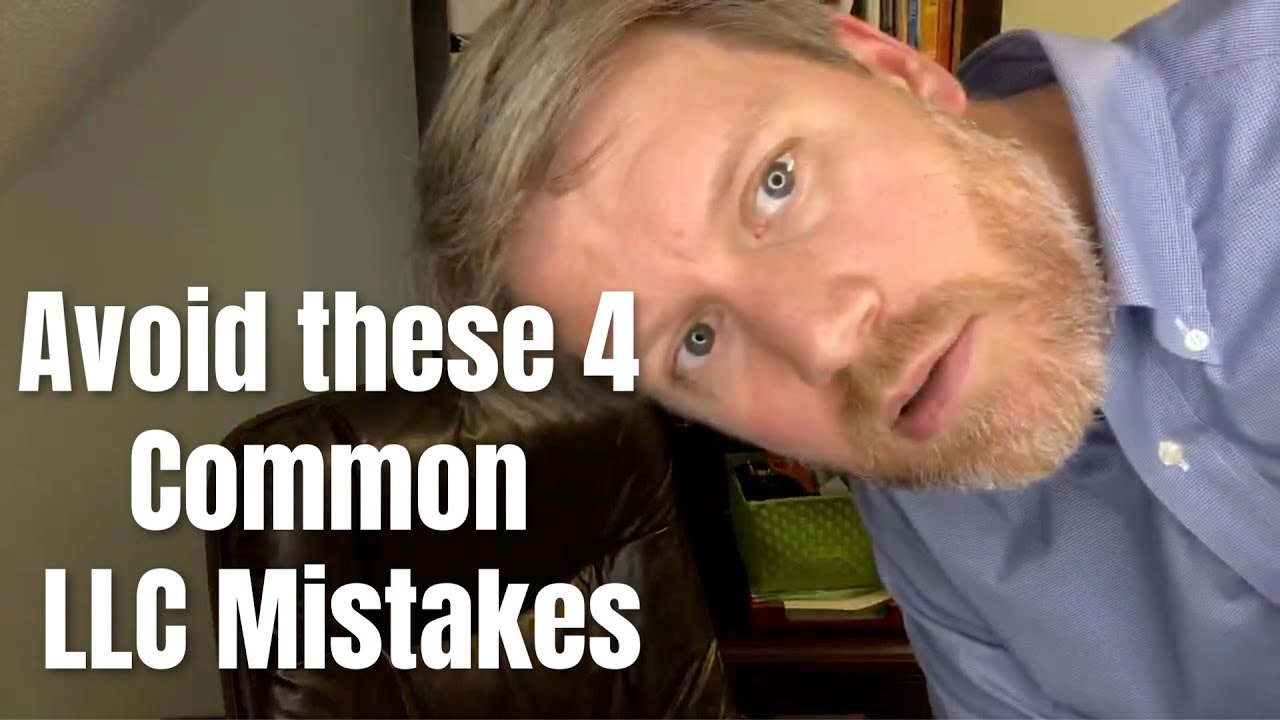
Attorney Jim Hart of Hawthorn Law has a blunt message for entrepreneurs who set up a single-member LLC and assume the paperwork alone protects them: it doesn’t. In his video “Single Member LLC Mistakes You Should Avoid – 4 Biggies,” Hart walks through the operational slip-ups that let a plaintiff’s lawyer or a creditor “pierce the corporate veil” and go after an owner’s personal bank account, house, or savings — the exact assets the LLC was formed to shield.
Hart’s point is that the LLC label on your bank account does nothing by itself. Courts look at how the entity actually behaves, and if it behaves like an extension of the owner’s personal wallet rather than an independent business, judges are willing to treat it that way.
- Hart identifies commingling personal and business funds — paying personal bills from a business account or treating the LLC as a “personal piggy bank” — as the top mistake that lets courts label the company an owner’s “alter ego.”
- He flags neglecting corporate formalities, including operating without an operating agreement or without clear books and written records, as a second major exposure point.
- Hart also warns against undercapitalizing the business and against signing contracts in a personal capacity rather than with a corporate title, both of which can bind the individual owner rather than the LLC itself.
Commingled Funds Invalidates Liability Protection
Hart’s first and heaviest warning is about mixing money. If an owner routinely pays personal expenses out of the LLC’s checking account, or moves cash back and forth without any record of why, a court reviewing the business later has grounds to conclude the LLC was never really a separate entity at all. That’s the legal concept of an “alter ego” — the company existed on paper, but in practice it was just the owner operating under a different name.
Once a court makes that finding, the liability shield the owner formed the LLC to get in the first place disappears. Hart’s advice is straightforward: separate bank accounts, separate credit cards, and no using company funds as a personal ATM. This is the same distinction covered in comparisons of an LLC vs a sole proprietorship — the entire benefit of the LLC structure depends on the business genuinely operating as its own thing.
Treating the company as a personal piggy bank is exactly what lets a court disregard the LLC and go after personal assets, according to Hart.
Skipping the Paperwork Creates an Opening
Hart’s second warning centers on documentation. A single-member LLC has fewer formal requirements than a corporation, but “fewer” isn’t “none.” Owners who never draft an operating agreement, or who keep no real books and no written record of business decisions, hand opposing counsel an easy argument: there’s no evidence this was ever run as a legitimate, independent company.
Written records — an operating agreement, clean financial statements, documentation of major decisions — are the paper trail that proves the LLC is a real entity rather than a formality invented after the fact to dodge liability. Entrepreneurs weighing whether to formalize an existing sole proprietorship into an LLC can find the mechanics of that transition covered in how to convert a sole proprietorship to an LLC, but Hart’s point is that converting is only step one — maintaining the paperwork afterward is what actually protects the owner.
Undercapitalization and the Contract-Signing Trap
The third and fourth mistakes Hart highlights are more subtle but just as damaging. Failing to adequately capitalize the business — not putting enough money or resources into the LLC to cover its likely obligations — is another factor courts weigh when deciding whether the entity was set up in good faith or just as a liability dodge.
The fourth mistake is a simple signature error: owners who sign contracts in their own name instead of signing with their corporate title bind themselves personally to that agreement, not the LLC. Hart’s guidance is to always sign as, for example, “Jane Smith, Manager of XYZ LLC” rather than just “Jane Smith” — a detail small enough to get overlooked and consequential enough to erase the whole point of forming the entity.
Keeping the Veil Intact
Taken together, Hart’s four mistakes form a checklist rather than a warning: separate accounts and credit cards, a real operating agreement, clean books, adequate capital, and titled signatures on every contract. Miss any one of them consistently, and a plaintiff’s attorney has a roadmap to argue the LLC was never more than a name on a filing.
Hart’s closing advice for single-member LLC owners is to properly record distributions and treat the entity as a distinct legal body in every transaction, not just the ones that feel important — because it’s the routine, boring paperwork, not the big decisions, that ends up deciding whether a court respects the corporate veil when someone finally tries to pierce it.









Tips and hints for finding deals and saving money on Amazon
Social Media Lifestyle Content
How a Sole Proprietorship Works | Introduction to Legal Structures
Sneaky Ways Fast Food Restaurants Get You To Spend Money
$1000 A Week: Front-Yard Market Farming + Bicycle Delivery Jim Kovaleski