

 InfoSearched
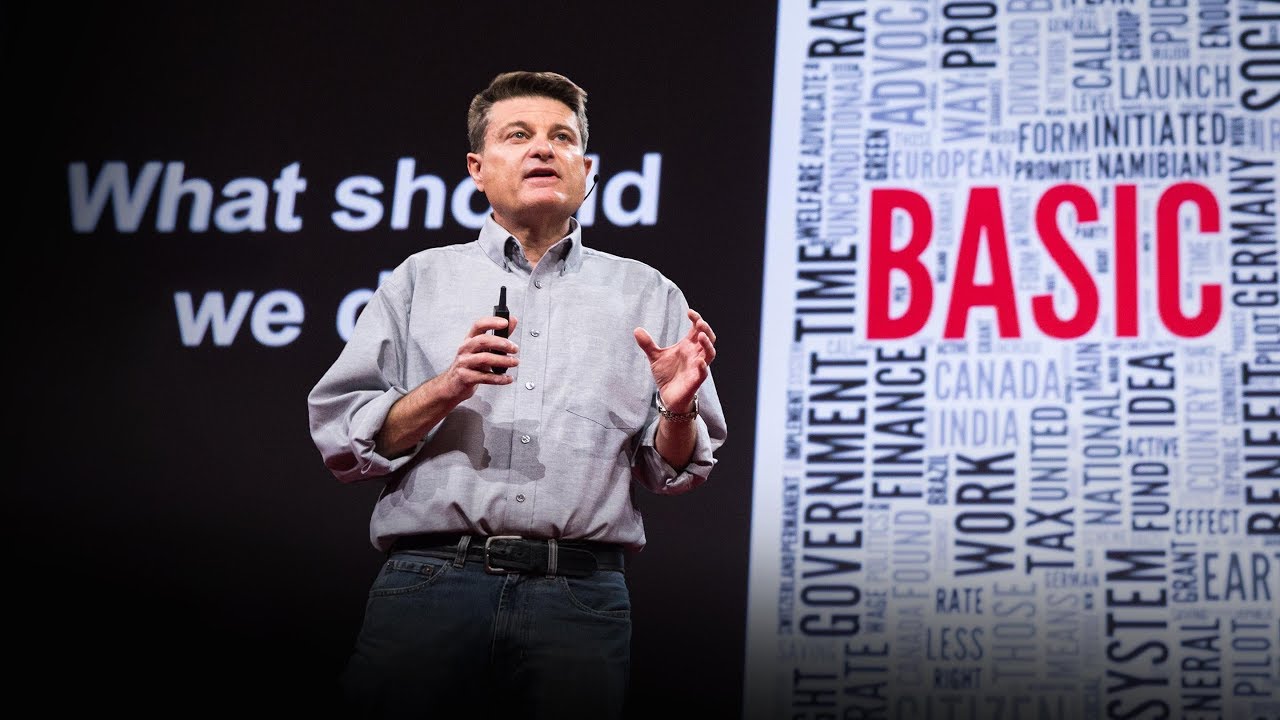
Martin Ford walked onto the TED2017 stage in Vancouver and told the audience the robots aren’t just coming for the assembly line — they’re coming for the office.
Software entrepreneur and futurist Martin Ford, author of the 2015 book “Rise of the Robots: Technology and the Threat of a Jobless Future,” used his TED Talk “How we’ll earn money in a future without jobs” to make an uncomfortable case: automation is no longer just displacing factory workers, it’s coming for analysts, accountants, lawyers, journalists, and radiologists. Filmed on April 25, 2017, and published online that October, the talk builds toward a specific policy proposal rather than a vague warning about the future of work.
- Ford argues today’s algorithms differ from past industrial disruption because they replace cognitive labor, not just manual labor, putting white-collar professions in the crosshairs.
- He warns that jobs are the market economy’s primary distribution channel for purchasing power — remove enough of them and businesses lose the consumer base that keeps growth going.
- His proposed fix is a universal basic income structured with civic incentives, such as bonuses for finishing high school or doing community volunteer work.
Distinguishing Features of Current Automation
Ford’s starting point is a correction to a common assumption: that AI and robotics are just the next chapter in a story that already played out with steam power and the assembly line. Those earlier disruptions displaced physical, repetitive labor while leaving room for humans to move into new kinds of work. Ford’s argument is that modern machine learning systems are increasingly capable of the pattern-recognition and judgment tasks that define professional, white-collar work — the jobs that were supposed to be automation-proof.
That’s why his list of threatened professions reads differently than a 1980s-era warning about robots on a factory floor. Analysts, accountants, lawyers, journalists, and radiologists all show up in his talk specifically because their work is built on processing information and applying rules — exactly what algorithms are getting good at.
The Economy’s Distribution Problem
Ford’s more structural point is about how a market economy actually functions: jobs aren’t just how people survive, they’re the mechanism that spreads purchasing power across the population so businesses have customers. If automation hollows out that mechanism without replacing it, Ford argues the economy risks a downward spiral — fewer employed consumers, weaker demand, and a drag on the same growth that businesses depend on.
That framing is what pushes Ford toward a guaranteed income rather than retraining programs or optimism about new job categories emerging. He’s not arguing that automation is bad for productivity — he’s arguing that productivity gains mean nothing to an economy if the income tied to them never reaches the people who’d spend it.
Redefining the Safety Net
Ford is careful to separate his proposal from the traditional image of welfare, where a shrinking pool of workers supports a growing number of people who can’t work. His reframing flips who’s doing the pulling.
Automated machines will become the “cart-pullers.”
In other words, Ford wants basic income treated as a claim on the productivity that machines are generating, not a handout funded by a strained labor force. That distinction is central to how he pitches UBI to an audience skeptical of expanding government transfer payments.
Incentives, Not Just a Check
Ford doesn’t present basic income as a finished solution. He calls it “a place to start” — a foundation, not a substitute for the incentives that structure a functioning society. His specific suggestion is to build civic incentives directly into the payment structure: financial bonuses for completing high school, or for doing community volunteer work, so the program rewards behavior that keeps communities functioning even as traditional employment shrinks.
That detail matters because it separates Ford’s version of UBI from a flat, unconditional check. He’s proposing something closer to a base income with built-in nudges — a system designed around the idea that people still need reasons to finish school and contribute locally, even if a paycheck from an employer isn’t guaranteed.
Ford’s talk doesn’t pretend to have solved the transition — he says as much himself, calling basic income a starting point rather than an answer. What he leaves the TED2017 audience with is a specific reframing: instead of asking which jobs survive automation, ask how a market economy keeps distributing purchasing power when fewer paychecks are doing that work, and build the incentive structure into whatever replaces them.









How to Find the Right Business Partner – GaryVee Meeting With Jasmine Star
Sneaky Ways Trader Joe’s Gets You To Spend Money
Blockchain Explained
3 POWERFUL Ways To Profit From Your BLOG… Starting TODAY!
Email Marketing