

 InfoSearched
Choosing a business entity comes down to one trade-off: simplicity versus protection.
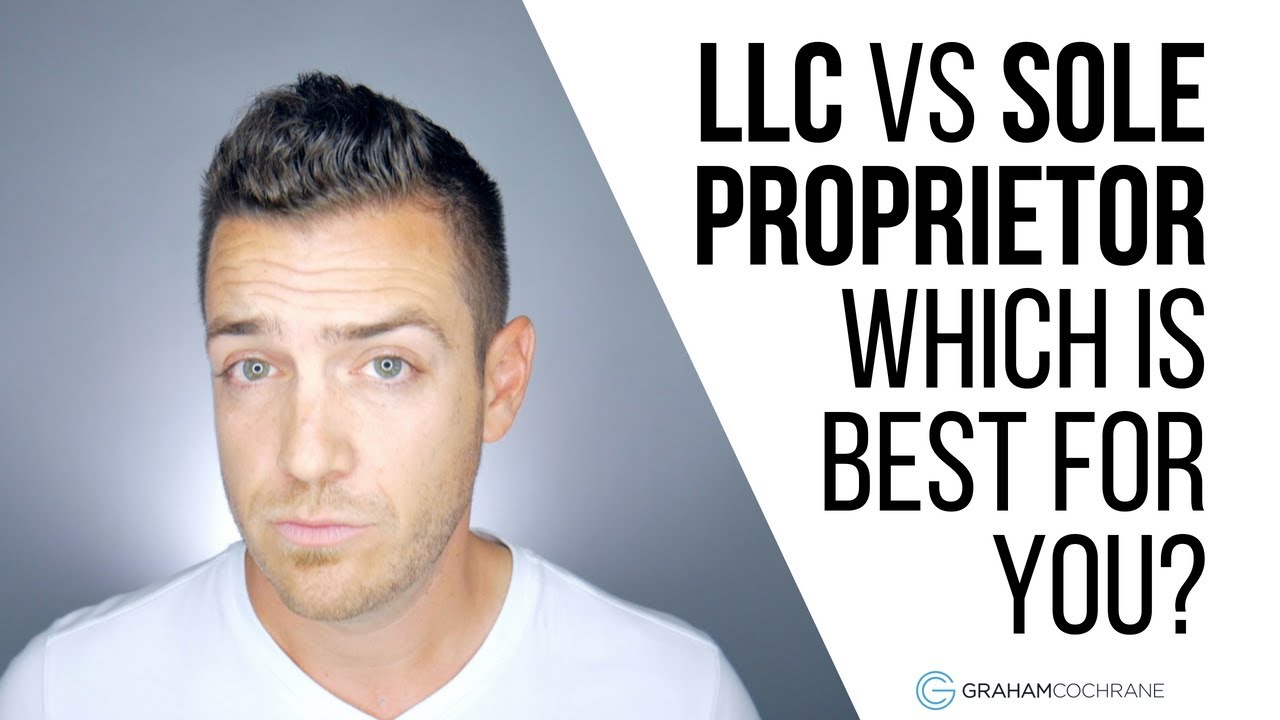
Business coach Graham Cochrane tackles one of the most common questions early-stage entrepreneurs ask him: should you run your business as a sole proprietor or set up an LLC? In his video “LLC vs Sole Proprietor: Which is best for YOUR business?”, Cochrane breaks down the legal and tax mechanics behind both structures and lays out a practical framework for matching the entity to the stage of the business.
- A sole proprietorship requires no state filing or fee, but exposes the owner’s personal assets — home, bank accounts, property — to business debts and lawsuits.
- An LLC is formed by filing Articles of Organization, typically costing $50 to $300 plus ongoing annual fees, and creates a legal shield between business liabilities and personal wealth.
- A single-member LLC is taxed by default as a “disregarded entity” — identical to a sole proprietorship on Schedule C, including the 15.3% self-employment tax — unless the owner elects S-Corp treatment.
The Default Option Nobody Files For
A sole proprietorship isn’t something you apply for — it’s what you already are the moment you start earning money from a business activity with no other entity in place. There’s no Articles of Organization, no state registration, no separate tax return. The owner and the business are legally the same person, which is exactly why it’s the simplest way to get started and, according to Cochrane, exactly why it carries the biggest risk.
That risk is unlimited personal liability. If the business racks up debt, gets sued, or defaults on an obligation, creditors aren’t limited to business assets — they can come after the owner’s house, savings, and personal property. For a freelancer with no employees and minimal risk exposure, that may be an acceptable trade for zero paperwork. For anyone signing contracts, hiring staff, or carrying inventory, it’s a much bigger gamble.
Benefits of Forming an LLC
An LLC is a separate legal entity, created by filing Articles of Organization with a state agency — generally a $50 to $300 filing fee plus annual maintenance costs. The core benefit, Cochrane explains, is the corporate shield: business risks stay with the business, and the owner’s personal assets are generally protected from company debts and litigation.
A single-member LLC is taxed by default exactly like a sole proprietorship — the liability protection is separate from the tax treatment.
That distinction trips people up constantly. Forming an LLC doesn’t automatically change how you’re taxed. By default, the IRS treats a single-member LLC as a “disregarded entity,” meaning profits flow straight to the owner’s Schedule C and get hit with the standard 15.3% self-employment tax — the same math as a sole proprietor. Readers who’ve already made the leap can walk through the mechanics of that transition in How to Convert a Sole Proprietorship to an LLC.
LLC Tax Flexibility Explained
The real advantage of the LLC shows up once profits grow. Unlike a sole proprietorship, an LLC can elect corporate tax treatment — most commonly an S-Corporation election — which lets the owner split income into a “reasonable salary” and remaining profit distributions. Because self-employment tax only applies to the salary portion, not the distributions, that structure can meaningfully cut the owner’s overall tax bill as revenue climbs.
Cochrane frames this as the deciding factor for owners weighing the switch: a sole proprietorship stays the cheaper, simpler option at low profit levels, but once a business is consistently generating enough net income to justify the added complexity, the LLC’s tax flexibility and liability protection start to outweigh the setup and maintenance costs. Owners who’ve already formed a single-member LLC should also watch the compliance side — a companion resource, Single Member LLC Mistakes You Should Avoid – 4 Biggies, covers the operational errors that can undermine that liability shield after formation.
The Framework Cochrane Offers
Rather than declaring one structure universally superior, Cochrane’s guidance boils down to matching the entity to the business’s actual risk and revenue: low-cost, low-liability, early-stage operations can run fine as a sole proprietorship, while businesses taking on contracts, debt, employees, or steady profit are better served filing for LLC status and, eventually, considering the S-Corp election once net income supports it.
The math only makes S-Corp treatment worth the paperwork once the self-employment tax savings clear the added accounting cost — for most solo operators, that’s the real threshold to watch before filing anything beyond the basic LLC.









How to Get Insider Trading Info for Free
Buying Rental Property with a Limited Liability Company (LLC)
EXACTLY how I do market research for new products
This Is How Much Money A Podcast With 50,000 Downloads Makes
Social Media Lifestyle Content