

 InfoSearched
A six-minute animation breaks down the one piece of tech behind Bitcoin that most people still can’t explain.
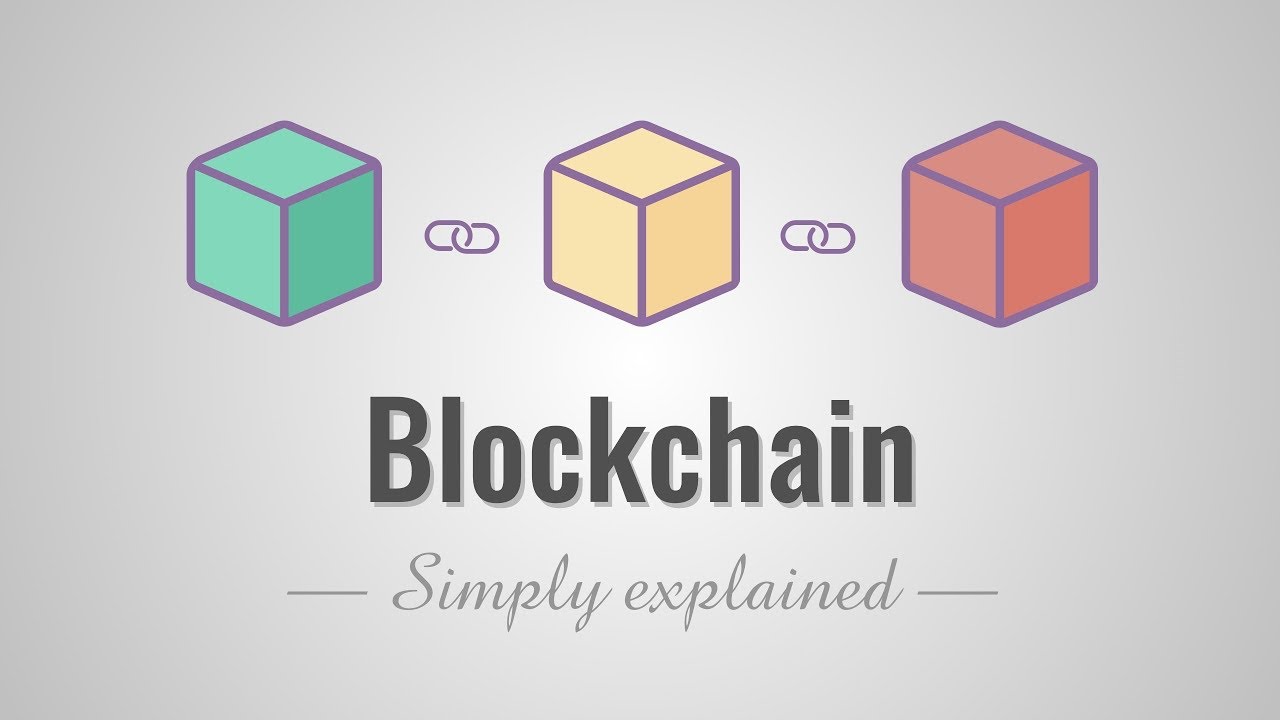
“Simply Explained,” the animated series run by Belgian creator Xavier Decuyper, built its channel on taking dense technical subjects and stripping them down to plain language. His video “How does a blockchain work – Simply Explained,” posted November 13, 2017, does exactly that with blockchain — the ledger system behind Bitcoin and, later, a lot more than currency. In about six minutes, Decuyper walks through what a block actually contains, why tampering with one is nearly impossible, and how a leaderless network of computers agrees on what’s true without a bank or government in the middle.
- Decuyper traces blockchain’s roots to 1991, when researchers first proposed the concept to timestamp digital documents, and to 2009, when Satoshi Nakamoto popularized it for Bitcoin.
- Every block is built from three parts: transaction data, a cryptographic hash unique to that block’s contents, and the hash of the previous block — the link that forms the chain.
- Because modern hardware can churn out hundreds of thousands of hashes per second, Bitcoin adds a proof-of-work requirement that takes roughly 10 minutes per block, and a peer-to-peer network where every node holds a full copy of the ledger.
Anatomy of a Block
Decuyper opens by defining a blockchain as a distributed ledger, open to anyone, made up of blocks chained together in sequence. Each block carries the actual transaction data — sender, receiver, and amount — plus a hash generated from that data, and, critically, the hash of the block that came before it. That last piece is what turns a pile of records into an actual chain: change anything inside a block and its hash changes with it.
He demonstrates this live in the animation. Edit a single number in a block’s transaction data, and the hash recalculates instantly, no longer matching what the next block has stored as a reference. Every block after the tampered one goes invalid in a cascade, which is the entire point — it makes silent edits to history visible immediately. Anyone curious how a similar architecture gets applied to a working cryptocurrency can see the mechanics laid out in how to make a cryptocurrency for less than $2.
Hashing Alone Provides Insufficient Security
Here’s the wrinkle Decuyper flags: hashing by itself isn’t real security. A modern computer can recalculate hundreds of thousands of hashes per second, meaning an attacker with enough processing power could, in theory, rewrite a block and then quickly recompute every subsequent hash to make the fraud look legitimate. Bitcoin closes that gap with proof-of-work — a deliberately expensive computation that slows block creation to about once every 10 minutes, no matter how much hardware you throw at it.
To successfully pull off a rewrite, an attacker needs to tamper with a block, recalculate the proof-of-work for every block that follows it, and take control of more than 50% of the peer-to-peer network — all at once.
Proof-of-Work and Network Consensus
The second defense is structural rather than mathematical: the peer-to-peer network itself. Every participant, or node, keeps a full copy of the blockchain. When a miner produces a new block, it’s broadcast across the network, and each node independently checks that the block hasn’t been tampered with before adding it to its own copy of the chain. Consensus, not a central authority, decides what counts as the real ledger.
That combination — proof-of-work slowing down block creation, and a P2P network spreading verification across thousands of independent nodes — is what makes the 51% attack scenario Decuyper describes so unrealistic. Rewriting old blocks would require redoing the proof-of-work for everything after them while simultaneously overpowering the majority of a global network, a cost that scales far beyond what any single actor could sustain.
Beyond Currency: Smart Contracts
Decuyper closes by noting that blockchain’s use case has already outgrown Nakamoto’s original design for moving coins around. He points to Ethereum’s smart contracts as the next step — code embedded directly on the chain that executes automatically when conditions are met, rather than a transaction record that just sits there waiting to be read.
Readers who want the fuller architecture behind that shift, including how consensus mechanisms and mining actually scale, can go deeper with Blockchain Explained or the longer breakdown in What is Blockchain Technology? (In Simple Terms).
Decuyper wraps the six-minute rundown by noting that Ethereum built directly on Nakamoto’s ledger model to let code itself run on the chain — smart contracts — turning blockchain from a way to move coins into a way to execute agreements without a bank, lawyer, or middleman anywhere in the process.









A Secret Way Of Getting Traffic
Billionaire Dan Pena’s Ultimate Advice for Students & Young People – HOW TO SUCCEED IN LIFE
How to Start a Blockchain Company with Brian Nelson (Episode #10)
The Incredible Story of The PayPal Mafia
Elon Musk on WEED & How His BRAIN Works