

 InfoSearched
Choosing the Right Business Structure
For millions of small business owners, the answer is the simplest one on the books. In the educational video “How a Sole Proprietorship Works | Introduction to Legal Structures,” business instructor Matthew Alanis of Alanis Business Academy breaks down why this structure remains the most widespread legal entity in the country — and where its simplicity turns into risk.
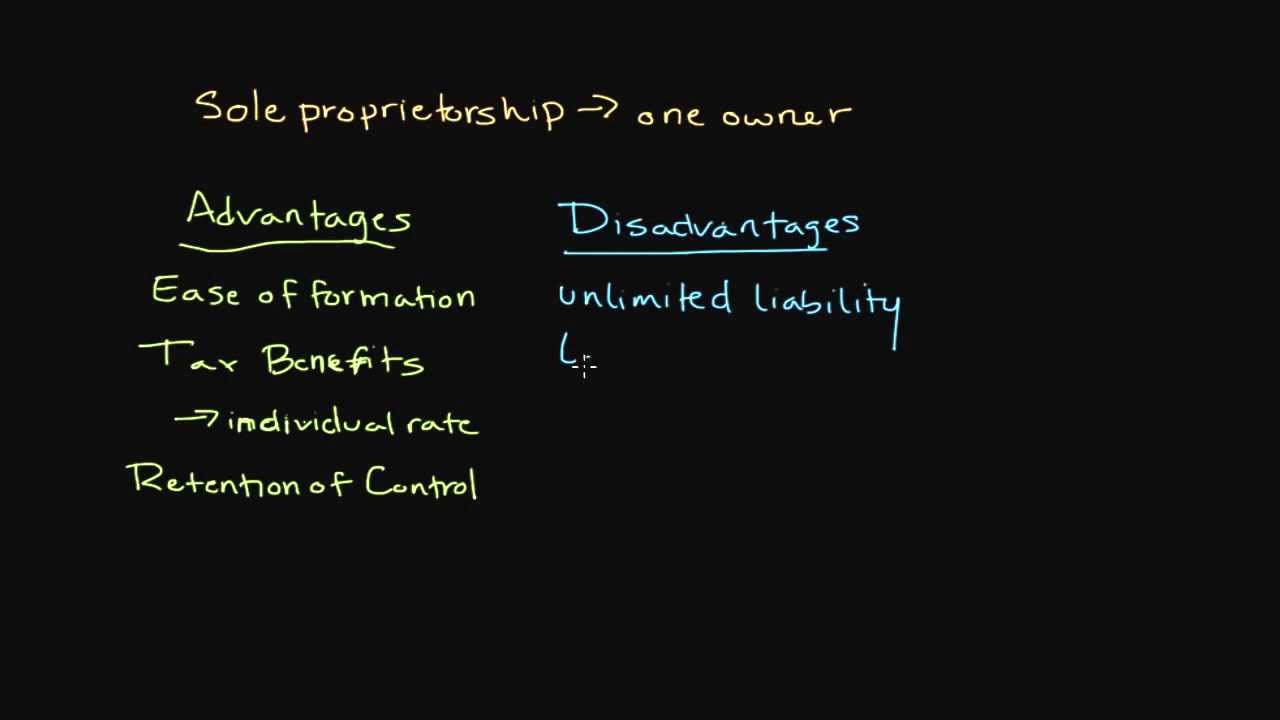
- A sole proprietorship is an unincorporated business owned and operated by a single person, with no legal separation between the individual and the enterprise.
- The owner keeps 100 percent of the profits and has full operational control, but also carries unlimited personal liability for business debts and legal judgments.
- The structure cannot issue stock or sell equity, makes bank financing harder to secure, and legally ends upon the owner’s retirement, disability, or death.
No Separation Between Owner and Business
Alanis’s central point is definitional: in a sole proprietorship, the owner and the business are legally one and the same. There’s no corporate veil, no board, no shareholders to answer to. That means the proprietor pockets every dollar of profit and makes every decision — pricing, hiring, hours, direction — without consulting partners or directors.
That total control is the appeal for many first-time entrepreneurs, and it’s part of why the structure keeps showing up as the default choice for freelancers, consultants, and small local operators covered in guides like 3 Steps To Starting A Home Business.
Minimal Paperwork, Pass-Through Taxes
Alanis walks through why the structure is so popular on the administrative side. There’s no mandatory state incorporation filing and no significant startup fees beyond standard local operating permits, business licensing, or a “Doing Business As” (DBA) registration if the owner wants to operate under a trade name rather than their own.
Taxes follow the same simplicity. Profits and losses pass directly through to the owner’s personal tax return, sidestepping the separate corporate tax filing that comes with incorporated entities. There are no annual shareholder meetings, no board minutes, no compliance calendar beyond what any individual taxpayer already handles.
The Liability Problem
Alanis frames unlimited personal liability as the structure’s defining drawback. Because the law treats the owner and the business as identical, there is nothing shielding personal assets from business debts or lawsuits. A judgment against the business can be collected against the owner’s home, personal bank accounts, or vehicles.
Owner and business are legally the same — which means the owner’s home, bank accounts, and car are all on the line if the business can’t pay its debts.
That exposure is the exact tradeoff entrepreneurs weigh when they later look at converting into an LLC, a comparison covered in LLC vs Sole Proprietor: Which is best for YOUR business? and in the step-by-step breakdown at How to Convert a Sole Proprietorship to an LLC.
Growth Ceiling and Continuity Risk
Beyond liability, Alanis identifies concrete limits on scaling. A sole proprietorship can’t issue stock or sell equity stakes to raise outside capital, which shuts off a financing route available to corporations. Banks, in turn, tend to view sole proprietorships as higher-risk borrowers, making loans harder to secure on favorable terms.
There’s also no business continuity built into the structure. Legally, the business ends the moment the proprietor retires, becomes disabled, or dies — there’s no separate entity that survives the individual, unlike a corporation or even a properly structured partnership.
For anyone weighing whether to stay a sole proprietor or make the jump to a single-member LLC once revenue picks up, the practical next read is what actually trips people up after that conversion — the kind of missteps outlined in Single Member LLC Mistakes You Should Avoid – 4 Biggies.






How a Sole Proprietorship Works | Introduction to Legal Structures
How Much Money Can You REALLY Make Selling On Amazon?
Meet The Real Estate Investor With 102 Tenants
Seth Godin | Advice that Changed My Life
Single Member LLC Mistakes You Should Avoid – 4 Biggies