

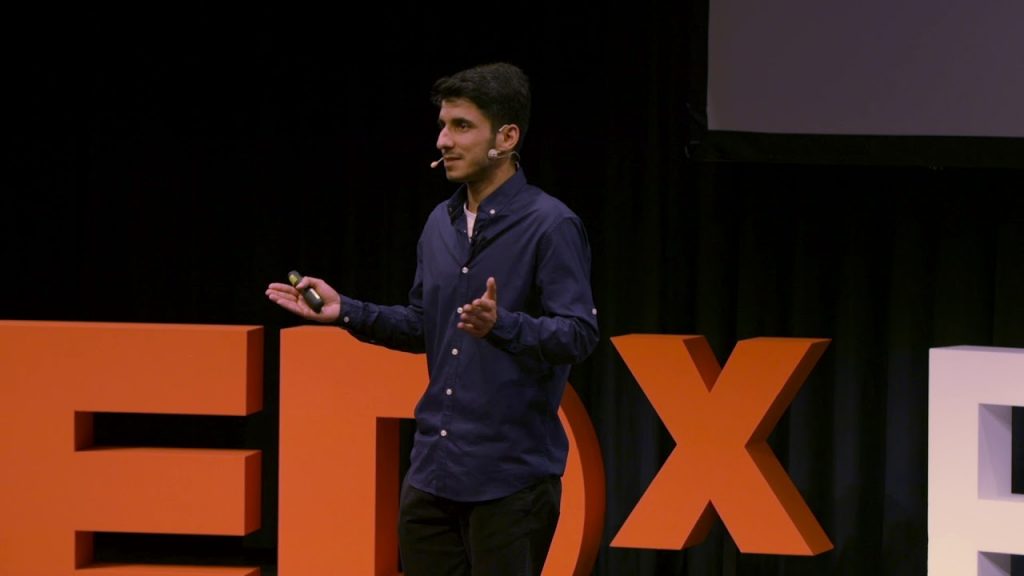
Design Your Dream Life Through Passive Income | Alex Szepietowski | TEDxUniversityofYork

 InfoSearched
A university student with top marks walked away from banking, law, and consumer goods to chase rent checks instead of a salary.
Alex Szepietowski didn’t drop out or stumble into property by accident — he graduated from the University of York with a Philosophy, Politics, and Economics degree, interviewed with Citigroup at Canary Wharf, and turned down the conventional 40-to-50-year corporate track most of his classmates were racing toward. In his TEDxUniversityofYork talk, “Design Your Dream Life Through Passive Income,” Szepietowski lays out how he went from student loans and credit-card debt to a multi-million-pound portfolio of Houses in Multiple Occupation, and why he thinks most graduates are optimizing for the wrong number.
- Szepietowski cites data showing the average person in the UK holds only 11 weeks of income in savings.
- Starting with no capital of his own, he partnered with private investors and paid them all off within two years while building an estate of 20 to 24 houses worth £3.5 million.
- He was later named Director of the Year by the Institute of Directors and picked up multiple other industry awards for his property business.
The Math Behind Active Versus Passive Income
Szepietowski opens with a distinction he says most people never sit down and actually work through: active income is time traded directly for money — a salary, a wage, an hourly rate — while passive income is upfront work that keeps paying out afterward. He frames financial freedom not as a lottery-ticket number but as a crossover point: the moment your recurring passive cash flow overtakes your monthly living costs. Until that 11-weeks-of-savings statistic changes for most households, he argues, people are one missed paycheck away from real trouble, which is exactly the fragility he says pushed him to look past a graduate scheme.
Rejecting the Canary Wharf Track
He’d done the rounds — Citigroup in Canary Wharf, accountancy, law, sales, a stint eyeing consumer goods at Procter & Gamble in Harrogate — and by his own account he was good at all of it. Good grades, strong interviews, real offers. What he couldn’t get past was the shape of the career itself: decades of exchanging hours for a salary with no ownership stake in the outcome. That’s when he picked up Robert Kiyosaki’s Rich Dad Poor Dad and started sitting in on property investment seminars, a path covered in more depth in The Biggest Trap People Fall Into – Robert Kiyosaki.
Within his first two years in business, Szepietowski paid off every private investor and had built an estate of 20 to 24 houses worth £3.5 million.
Funding a Portfolio From Zero
He had no capital of his own to start — he used his student loan and credit cards just to pay for his property education, then turned to private investors to actually fund deals. The bet paid off fast: those investors were repaid in full within two years, and the portfolio that emerged leaned heavily on high-end HMOs built for young professionals rather than the lower-margin student lets most beginners chase. That specialization is what he credits for the speed of the buildout, and it’s the same logic behind niche strategies covered in How to Find and Buy a Foreclosed Home and Meet The Real Estate Investor With 102 Tenants.
Beyond Property
Szepietowski is careful to note that HMO investing is just the vehicle he happened to use, not the only route to the same outcome. He points to automated business ownership, affiliate marketing, and network marketing as other legitimate paths to recurring income — a menu he ran through for students in the room who might not want to touch bricks and mortar at all. Anyone weighing one of those alternate routes can find a practical breakdown in Launching into Affiliate Marketing: A Guide.
His closing pitch to the York crowd wasn’t about property specifically — it was about the calendar. He tells students to take the calculated risk while they’re young and the downside is small, because the same leap gets harder every year salary, mortgage, and comfort pile up around it.





Benefits Of Online Credit Card Processors and what to watch out for
What is blockchain and how can it change our society?
Conor Mcgregor | 5 Minutes For The NEXT 50 Years of Your LIFE
LTO | BlockchainBrad | Hybrid Business Blockchain | Easy & Scalable | Tokenised Enterprise
This Is How Much YouTube Paid Me For My 1,000,000 Viewed Video (not clickbait)