

 InfoSearched
Tim Ferriss has spent two decades arguing that working harder is the wrong goal entirely.
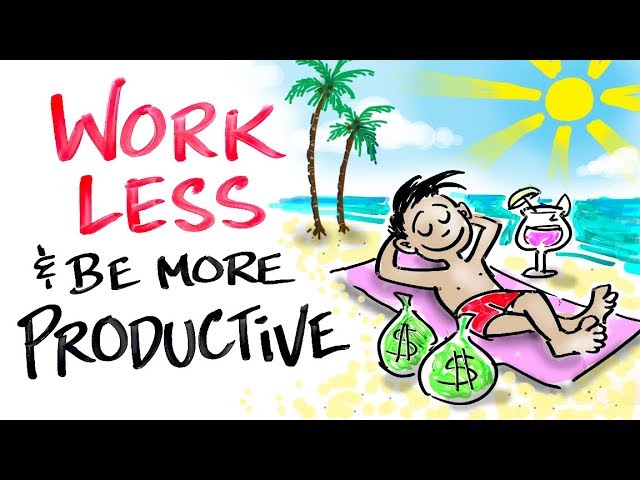
The animated channel After Skool built its latest whiteboard breakdown around audio from Ferriss, the author of “The 4-Hour Workweek” and host of “The Tim Ferriss Show,” laying out the operating system he uses to strip hours out of the workday without sacrificing output. The video, “How To Work Less & Be More Productive,” pairs After Skool’s hand-drawn illustrations with Ferriss’s own voice explaining why he treats constant busyness as a symptom of poor thinking rather than a badge of honor.
- Ferriss builds his framework on two rules: the Pareto Principle, which holds that 80% of results come from 20% of effort, and Parkinson’s Law, which states that work expands to fill whatever time is allotted to it.
- He argues that busyness is often “a form of laziness” — lazy thinking dressed up as hard work — and pushes effectiveness (doing the right things) over efficiency (doing unnecessary things well).
- His concrete tactics include naming the single most uncomfortable to-do item each morning, imposing artificial deadlines to compress work windows, and clearing low-priority messages before starting deep work.
Pareto Principle Prioritizes Daily Productivity
The Pareto Principle is the anchor of the entire video: Ferriss insists that a fifth of any task list is doing almost all the heavy lifting toward a meaningful outcome, while the rest is filler that feels productive but isn’t. Instead of clearing a full inbox or working through a to-do list top to bottom, he tells viewers to isolate that critical 20% and attack it first, before anything else competes for attention. After Skool’s illustrations walk through this as a sorting exercise — separating tasks that move the needle from tasks that simply feel urgent.
That distinction between busy and effective is where Ferriss draws his sharpest line. He frames constant activity — back-to-back meetings, an always-full calendar, an inbox at zero — as something people default to because it’s easier than deciding what actually matters. Real prioritization, in his telling, requires the harder work of critical thought up front.
Being busy is a form of laziness — lazy thinking and indiscriminate action.
Parkinson’s Law and the Artificial Deadline
The video’s second pillar is Parkinson’s Law — the idea that a task will stretch to consume however much time you give it. Ferriss’s counter is to compress the window on purpose. Setting a strict, artificial deadline for a piece of work, he argues, forces the brain to cut straight to what’s essential rather than let a project drift for days because the calendar allowed it to.
He applies the same logic to communication. Before opening email or Slack, Ferriss recommends clearing out anything low-priority first, so that the first block of real working time each day goes to deep work instead of getting hijacked by other people’s inboxes. It’s a small sequencing change, but it’s the difference between reacting all morning and actually producing something.
The Morning Task That Sets the Tone
Ferriss’s most repeated habit in the video is choosing one task each morning — specifically the most uncomfortable or highest-impact item on the list — and finishing it before anything else. The reasoning tracks straight back to the 80/20 framework: if a small number of tasks drive most of the outcome, then the hardest one is usually the most important one, and delaying it just gives Parkinson’s Law more room to work against you.
He extends this into aggressive pruning of obligations that don’t serve a real goal — meetings, commitments, and requests that exist mostly out of habit or social pressure rather than necessity. Cutting those, in his framing, isn’t about doing less work overall; it’s about protecting the hours that go toward the 20% that actually counts.
Effectiveness Over Efficiency
After Skool’s visuals repeatedly return to one distinction: efficiency measures how well you do a task, while effectiveness measures whether that task should have been done at all. Ferriss treats this as the core failure mode of most productivity advice — people optimize their process for tasks that never needed to exist in the first place. His answer is to audit the task list itself before optimizing how it gets executed, which is the same instinct behind advice from other business voices InfoSearched has covered, including Seth Godin’s take on the advice that changed his life and the routines detailed in why billionaires structure their mornings around 4 a.m.
None of Ferriss’s system depends on working longer hours to compensate for a slow start — the whole point is that the compressed window, the uncomfortable task cleared first, and the pruned obligation list are supposed to add up to fewer hours worked and more actually finished by the time most people are still opening email.







How I Make Millions On Airbnb With No Property And No Credit
The Greatest Secret Of The Rich
A Click On Your Profits
The Greatest Secret Of The Rich
How the blockchain is changing money and business