

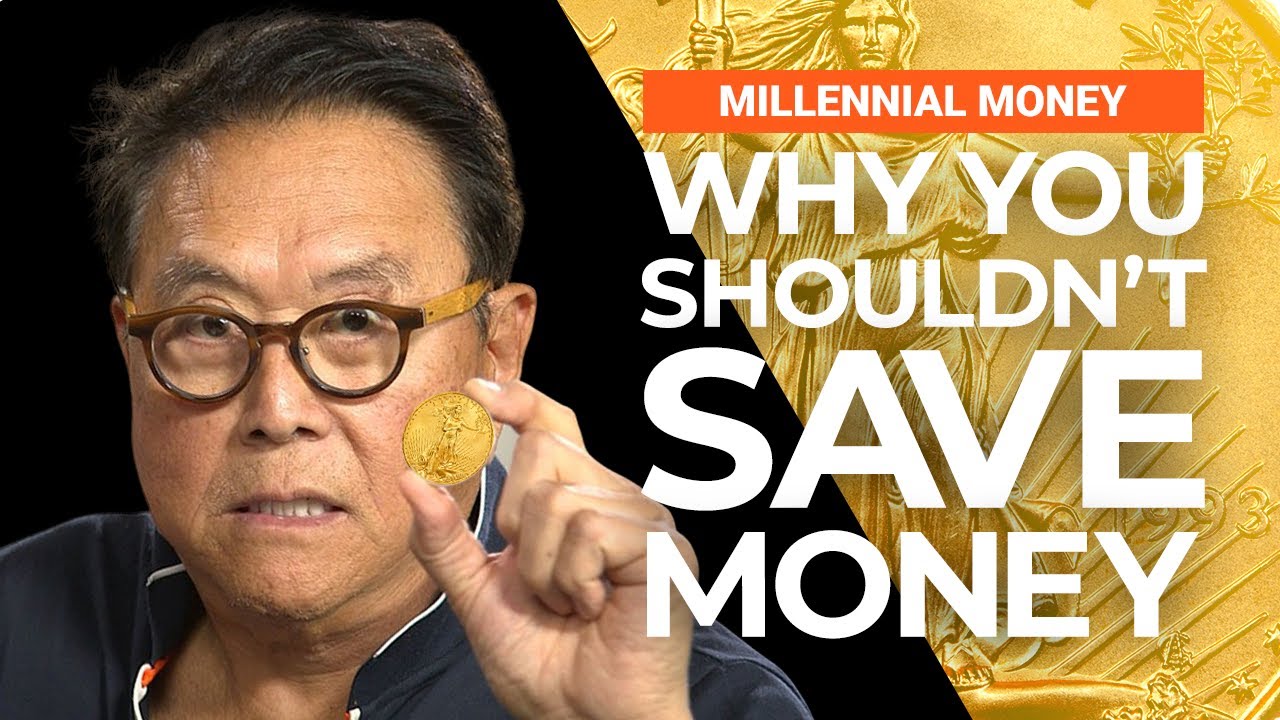
Fake Money Is Making You Poorer! Why Savers are LOSERS – Robert Kiyosaki [ Millennial Money ]
 InfoSearched
Robert Kiyosaki wants you to stop trusting the dollar in your savings account.
In “Fake Money Is Making You Poorer! Why Savers are LOSERS,” produced for The Rich Dad Channel’s Millennial Money series, Robert Kiyosaki lays out the argument that anchors his 2019 book FAKE: How Lies Are Making the Poor and the Middle Class Poorer. His target audience is young people who’ve been told to work hard, save diligently, and trust the system — and his message is that this advice, under the current monetary regime, is a losing bet.
- Kiyosaki traces the “fake money” era to August 1971, when President Richard Nixon ended the Bretton Woods agreement and severed the dollar’s link to gold, turning it into pure fiat currency.
- His central claim: “savers are losers” because central banks and governments print trillions of dollars, and inflation quietly taxes anyone holding cash while purchasing power erodes.
- His prescribed hedge is acquiring debt to buy cash-flowing assets and holding what he calls “God’s money” — physical gold and silver — alongside real estate and commodities.
The 1971 Break From Gold
Kiyosaki’s timeline starts with a single decision. When Nixon closed the gold window in 1971, the dollar stopped being redeemable for a fixed weight of gold and became money backed only by government promise. For Kiyosaki, that’s the dividing line between “real money” — historically gold and silver — and “fake money,” which he defines as currency created by decree and expanded at will by central banks.
That distinction isn’t academic in his telling. Once a currency is no longer tethered to a hard asset, there’s no natural limit on how much of it can be printed, and every dollar printed dilutes the ones already in someone’s bank account or paycheck.
Kiyosaki Defines Savers as Losers
This is the line that gives the video its title, and it’s the same lesson Kiyosaki has repeated since Rich Dad Poor Dad: a worker who saves fiat currency in a bank account is losing purchasing power every year inflation runs hotter than the interest that account pays. He frames it as a stealth tax — governments and central banks don’t need to raise rates on savers directly when they can simply print enough new currency to devalue what’s already saved.
Savers are losers.
He extends that critique to the education system, arguing schools train students to become employees who chase raises and pensions denominated in the same fiat currency he says is being debased, rather than teaching the financial literacy needed to recognize the trap. Readers curious about that broader argument against conventional employee-mindset advice can find related commentary in The Biggest Trap People Fall Into – Robert Kiyosaki.
Debt, Real Assets, and “God’s Money”
Kiyosaki’s alternative isn’t complicated on its face: instead of working for fiat currency and parking it in savings, he tells viewers to use debt to acquire assets that actually produce cash flow — rental property, businesses, income-generating investments — and to hold physical gold and silver as insurance against further currency debasement. He calls precious metals “God’s money” specifically because, unlike fiat currency, they can’t be created by a printing press or a keystroke at a central bank.
That’s a long-running theme across his commentary, and it lines up with the broader case for metals as a hedge that’s been made elsewhere on the topic, including in A must hear report on gold and silver. Kiyosaki’s version simply folds it into his larger thesis: debt used to buy productive assets isn’t the enemy — cash sitting idle in a savings account is.
The Inflation Math Behind the Argument
Kiyosaki doesn’t dispute that people should save something — his objection is to saving in a currency that central banks can expand without limit. When trillions of new dollars enter circulation, he argues, the number in a savings account stays the same while what it can actually buy shrinks. For a young saver following the traditional advice of stacking cash for decades, that’s a guaranteed decline in real terms, even if the account statement never shows a loss.
Kiyosaki has been making variations of this argument since the 1990s, but he built an entire book around it in 2019 for a reason: with rates near historic lows and central banks still leaning on stimulus years after the 2008 crisis, he’s betting a new generation of savers needs to hear it before they lock decades of paychecks into cash they’ll watch quietly lose value.







How To Find Products To Sell Online
What is Blockchain Technology? (In Simple Terms)
This Is How Warren Buffett REALLY Made 85 Billion Dollars
10 Easy Steps For Getting Video On Your Business Website
How DO You Price Your eBook?