

 InfoSearched
Blockchain isn’t just Bitcoin’s back office — it’s a ledger that IBM says can track a diamond, a shipping container, or a patent just as easily as a coin.
In a July 30, 2019 lightboard session for IBM Cloud, IBM technologist Sai Vennam sets out to correct the most common misconception about blockchain: that it’s just a synonym for cryptocurrency. Using a whiteboard-style walkthrough, Vennam breaks the technology down into its actual working parts — distributed ledgers, cryptographic hashing, and consensus — and explains why enterprises outside of finance are building on it. The video is aimed squarely at business and technical viewers trying to understand what problem blockchain actually solves.
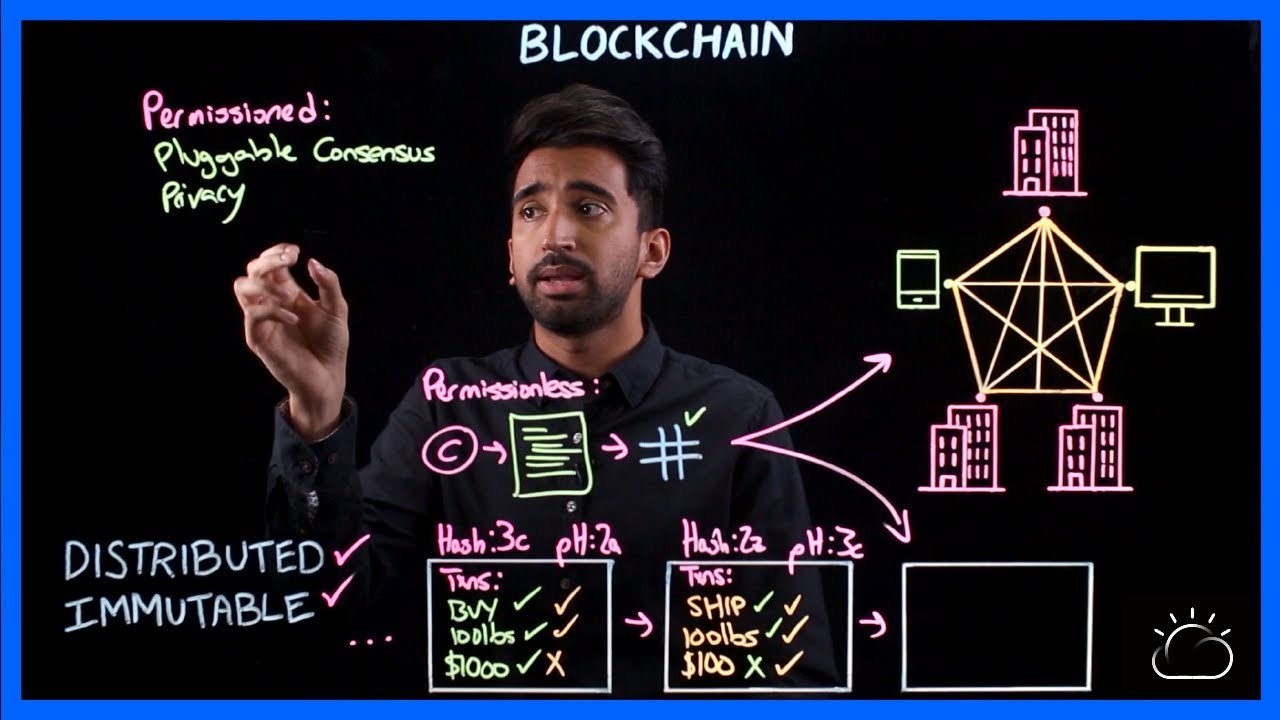
- Vennam defines blockchain as an open, distributed, and immutable ledger capable of tracking both tangible assets (real estate, diamonds) and intangible assets (intellectual property) across a decentralized network.
- He breaks down three core components that make the ledger tamper-resistant: distributed ledger technology (every participant holds a synced copy), cryptographic hashing that chains blocks together, and consensus mechanisms that validate entries without a central intermediary.
- The presentation draws a clear line between permissionless public networks like Bitcoin and permissioned enterprise blockchains, then highlights smart contracts as the feature driving business adoption by automatically executing terms once conditions are met.
The Ledger Represents Fundamental Innovation
Vennam’s starting point is that blockchain is a data structure problem before it’s a currency problem. Instead of one company or bank holding the master copy of a record, every node on the network holds an identical, synchronized copy. That’s the “distributed” part of distributed ledger technology, and it’s the reason no single participant can quietly edit history without every other copy on the network flagging the mismatch.
The immutability comes from cryptographic hashing — each new block contains a hash tied to the block before it, so altering a past transaction would require rewriting every subsequent block across every copy of the ledger simultaneously. Vennam frames this as the mechanical reason blockchain is described as tamper-proof, rather than a marketing buzzword. For readers who want the deeper technical build-out of hashing and block structure, the concepts here echo what’s covered in longer breakdowns like What is Blockchain Technology? (In Simple Terms).
Consensus Replaces the Middleman
The third pillar Vennam lays out is consensus — the process by which network participants agree a new block is valid before it gets added to the chain. This is what lets a blockchain network operate without a bank, a clearinghouse, or any other central intermediary vouching for the transaction. Different networks use different consensus models, but the underlying idea Vennam stresses is the same: trust gets distributed across the network instead of concentrated in one institution.
Blockchain isn’t tied to Bitcoin — it’s a way to track any asset, tangible or intangible, without a central authority vouching for the record.
Public Chains Versus Enterprise Networks
Vennam separates the blockchain world into two camps. Permissionless, or public, blockchains — Bitcoin being the obvious example — let anyone join the network, submit transactions, and participate in validation. Permissioned, or enterprise, blockchains restrict who can join and what roles they can play, which is the model businesses tend to reach for when they need governance, privacy controls, and known counterparties rather than total anonymity. This distinction is the reason a bank consortium and a cryptocurrency exchange can both say they’re “on blockchain” while running fundamentally different systems, a nuance explored further in How to make a cryptocurrency for less than $2.
Smart Contracts as the Enterprise Payoff
The efficiency argument, according to Vennam, lives in smart contracts — self-executing code stored directly on the chain that triggers an action automatically once pre-set conditions are satisfied. Instead of a manual sign-off, a dispute process, or a paper trail chasing a signature, the contract fires itself the moment the agreed terms are met. Vennam points to supply chains and cross-business transactions as the clearest beneficiaries, since smart contracts cut administrative overhead and remove a common source of disputes between counterparties who don’t fully trust each other’s paperwork.
For companies weighing whether blockchain is worth the build, that’s the actual pitch: not speculation on a coin price, but fewer intermediaries, fewer reconciliation errors, and a shared record nobody can quietly rewrite. Vennam’s lightboard session ends there — a technologist’s case for why the ledger, not the token, is the part of blockchain enterprises should be paying attention to.







A Secret Way Of Getting Traffic
This Is How Much YouTube Paid Me For My 1,000,000 Viewed Video (not clickbait)
Having a Business Partner vs Going Solo
“Getting Rich Is Easy”
Why the Global Chip Shortage Is Hard to Overcome