

 InfoSearched
Pricing a Kindle ebook wrong can quietly cap an author’s income before a single sale happens.
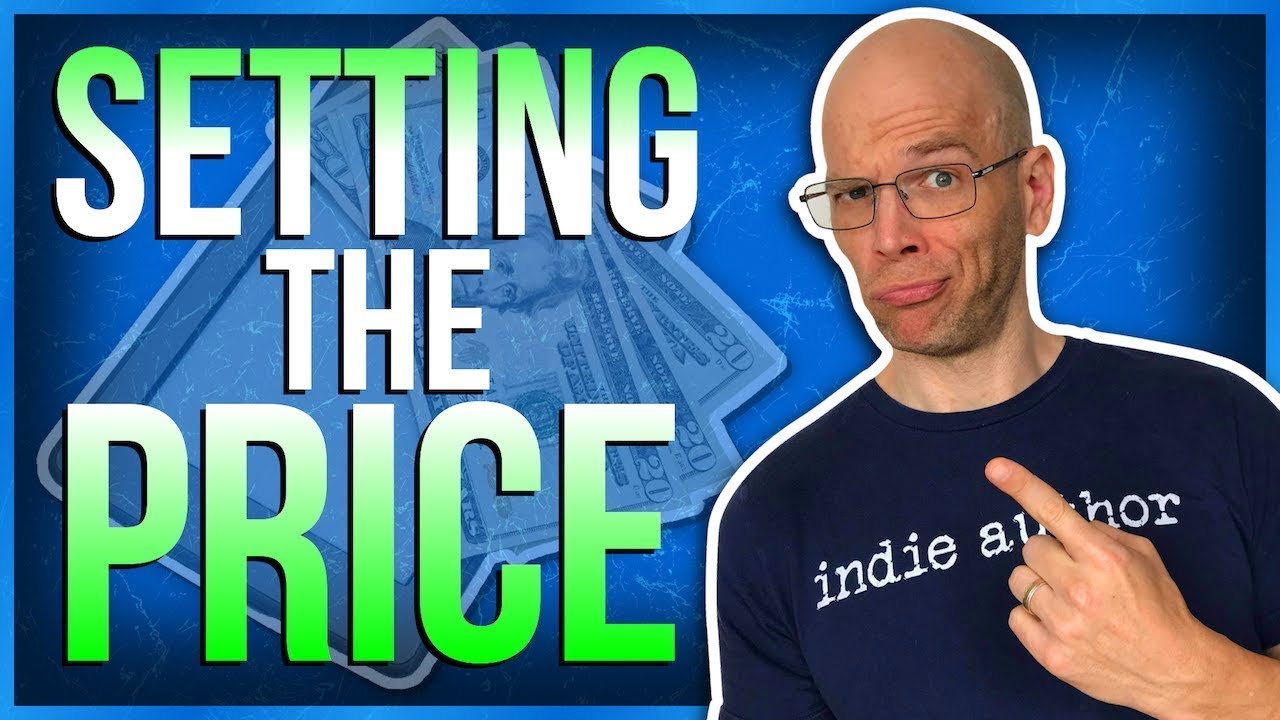
Indie author and publishing educator Dale L. Roberts breaks down that exact problem in his tutorial “Kindle Book Pricing Strategy – How to Price Your Kindle eBook,” posted to his channel Self-Publishing with Dale. Roberts walks Amazon KDP authors through the royalty math Amazon builds into its pricing tiers and explains why a $0.99 listing and a $9.99 listing can produce wildly different payouts per sale. The video is aimed squarely at self-published writers trying to decide what number to type into the pricing box before they hit publish.
- Amazon KDP pays a 70% royalty (minus delivery fees) on ebooks priced between $2.99 and $9.99, but drops to a 35% royalty on anything priced below $2.99 or above $9.99.
- Roberts frames $0.99 as a temporary promotional tool — a launch trigger or series starter meant to harvest reviews and rank — not a sustainable everyday price.
- He identifies $2.99 to $4.99 as the standard indie sweet spot for impulse purchases and steady royalty income, reserving $5.99 and up for established author brands or longer works.
The 70% Royalty Window
The center of Roberts’s tutorial is Amazon’s royalty split, which he treats as the single most important number in an author’s pricing decision. Books priced from $2.99 through $9.99 qualify for the 70% royalty tier, with Amazon deducting a small delivery fee based on file size. Step outside that window in either direction — down to the popular $0.99 price point or up past $9.99 — and the royalty rate collapses to 35%, cutting an author’s take on every sale roughly in half.
That math means a $0.99 sale nets an author only about 35 cents, while a $2.99 sale at 70% royalty pays out close to $2. Roberts uses that gap to argue that authors chasing volume at rock-bottom prices need to sell more than eight times as many copies at $0.99 to match the revenue of a single $2.99 sale at the higher royalty tier.
Strategic Value of Psychological Pricing
Roberts doesn’t dismiss the $0.99 price point outright — he repositions it. In his framework, $0.99 works as a short-term hook: a way to prime the first book in a series, generate an initial wave of reviews, or spike a book’s rank in the Kindle store during a launch window. The goal isn’t profit on that individual title; it’s momentum that can pull readers into buying the rest of a series at full price.
$0.99 is a promotional price, not a business model.
That distinction matters for anyone weighing a permanent discount against a limited-time push. Authors debating exactly where to land on price point by point can work through the fuller breakdown in How DO You Price Your eBook?, which covers the same territory from a slightly different angle.
The Indie Standard: $2.99 to $4.99
For everyday, ongoing sales, Roberts points authors toward the $2.99 to $4.99 range as the indie market’s default zone. It sits comfortably inside the 70% royalty tier, still reads as an impulse buy to browsing Kindle shoppers, and generates meaningfully more per-sale revenue than the promotional $0.99 tier. He reserves $5.99 and higher for authors with an established readership or longer, higher-perceived-value works, where price resistance is lower because the audience already trusts the brand.
Countdown Deals and Paperback Alignment
Roberts also walks through KDP Select’s Kindle Countdown Deals, a promotional tool that temporarily drops an ebook’s price — often to $0.99 — while still paying the author at the 70% royalty rate during the promotion window. That combination lets authors run an aggressive discount for visibility without eating the full 35% royalty penalty that a permanent low price would trigger. He pairs that tactic with a note on aligning ebook and paperback pricing, arguing that keeping a reasonable gap between the two formats reinforces the ebook’s perceived value rather than making shoppers wonder why the print edition costs so much more.
Authors mapping out a full publishing plan rather than just a launch-day discount can pair Roberts’s pricing framework with the process-level advice in Step-By-Step Guide to Writing eBook, since pricing decisions only pay off once the manuscript and cover are actually ready to publish.
Roberts’s bottom line is simple arithmetic dressed up as strategy: pick $0.99 to move units fast for a launch, pick $2.99 to $4.99 to actually make money on the back end, and use Countdown Deals when you want the visibility of a cheap price without giving up the 70% cut.




5 eBay Selling Tips for Newbies
Starting a Business – Register an LLC or Start Sole Proprietorship
The Biggest Trap People Fall Into – Robert Kiyosaki
How DO You Price Your eBook?
5 Important Lessons people Learn TOO LATE In Life