

 InfoSearched
Direct mail isn’t dead — it’s just gotten a lot pickier about who gets a stamp.
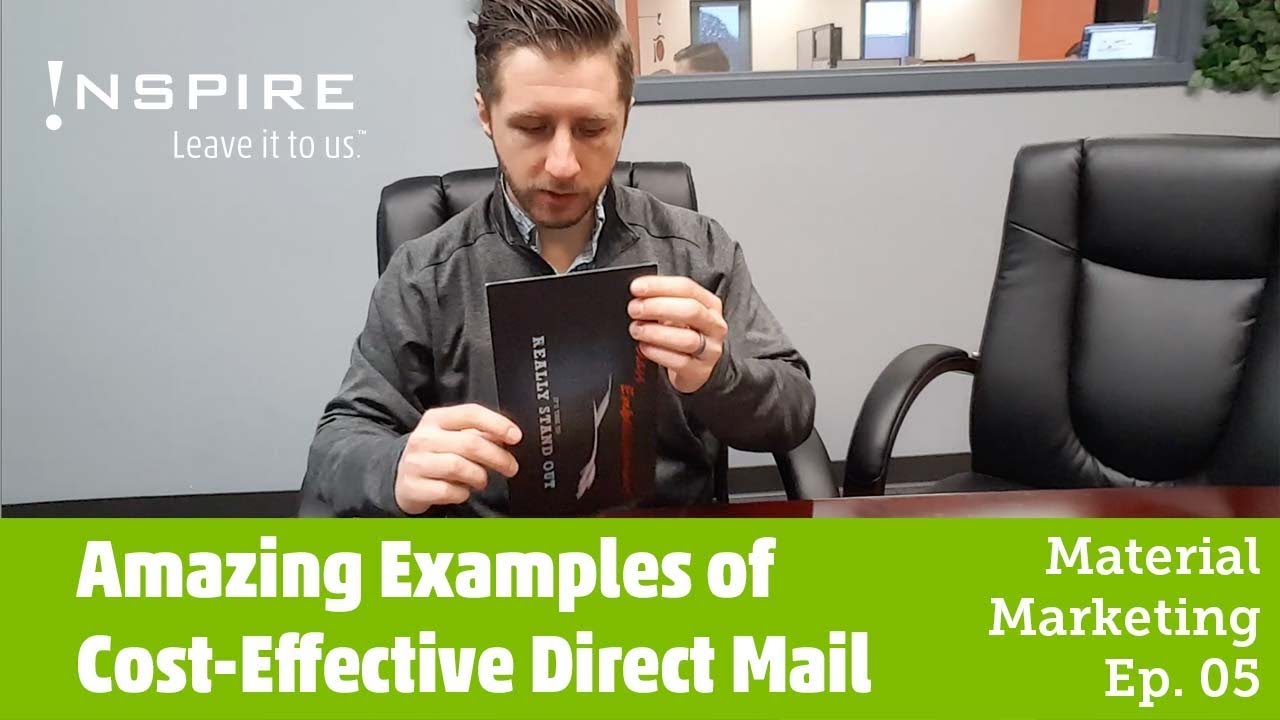
Episode 05 of Inspire Marketing Services’ educational video series tackles a question every small-business owner eventually asks: how do you make a mailbox campaign pay for itself instead of just piling up in the recycling bin? The agency’s answer isn’t about spending more on printing — it’s about spending smarter on who receives the piece and how it’s built to get opened.
- Inspire Marketing Services frames cost-effectiveness as starting with list hygiene and segmentation — trimming unqualified recipients before a single piece goes to print to cut wasted postage.
- The episode highlights tactile formats — 3D dimensional mailers, multi-step teaser sequences, and custom-folded cards — as ways to lift open rates without inflating the size of the print run.
- Core principles pushed throughout the series include framing mail as a personal communication rather than commercial spam, repeating a clear call to action, and embedding a tangible incentive like a coupon or exclusive discount.
List Hygiene Comes Before Creative
Before Inspire Marketing Services gets into design, the agency insists the campaign’s fate is decided at the list-building stage. A clean, segmented list — matched to specific customer demographics rather than a broad, undifferentiated mailing — determines whether a business burns budget on postage that lands with people who were never going to respond. That discipline is the same math that underlies any customer-acquisition channel: the offer only works if it reaches someone who actually wants it, a principle that shows up just as often in market research for new products as it does in a mail drop.
Formats That Beat the Flat Envelope
Once the list is right, the episode turns to format. A standard flat letter competes with bills and catalogs for maybe two seconds of attention before it’s sorted into the trash. Inspire Marketing Services points to dimensional mailers, sequenced teaser campaigns sent in stages, and custom-folded cards as ways to force a second look — the physical shape of the piece does work that copy alone can’t. None of that requires a bigger print run; it requires spending the same budget on a format built to survive the first glance.
Writing It Like a Letter, Not a Flyer
The tone of the piece matters as much as its shape. Episode 05 pushes marketers to write copy that reads like correspondence from a person, not a broadcast from a brand — repeating the call to action in a sidebar or postscript so it’s impossible to miss even on a skim.
A mailer that reads like a note from a friend gets opened. One that reads like a flyer gets recycled.
That’s the throughline of the agency’s approach: personalization isn’t a nicety, it’s the mechanism that keeps the piece out of the trash long enough for the offer to land.
Turning a Coupon Into a Conversion
The final piece of Inspire Marketing Services’ formula is the incentive itself — a redeemable coupon, a promotional gift, or an exclusive discount that gives the recipient a concrete reason to act rather than just a reason to notice. That’s also where offline mail starts to earn its keep against digital channels: a physical incentive can drive someone straight to a website or storefront, turning a mailbox impression into a trackable visit. It’s the same logic that makes email marketing effective when it’s paired with a clear offer instead of a generic newsletter blast.
Inspire Marketing Services built Episode 05 as one installment in a running series, and the throughline across every episode is the same: postage costs money, so the tactic that survives a budget review is the one engineered to get opened, read, and acted on — not the one that simply gets mailed.




Is This The Billionaire’s Shortcut? (The Real Life NZT)
A Secret Way Of Getting Traffic
How to Convert a Sole Proprietorship to an LLC
Internet Business Ideas
A Click On Your Profits